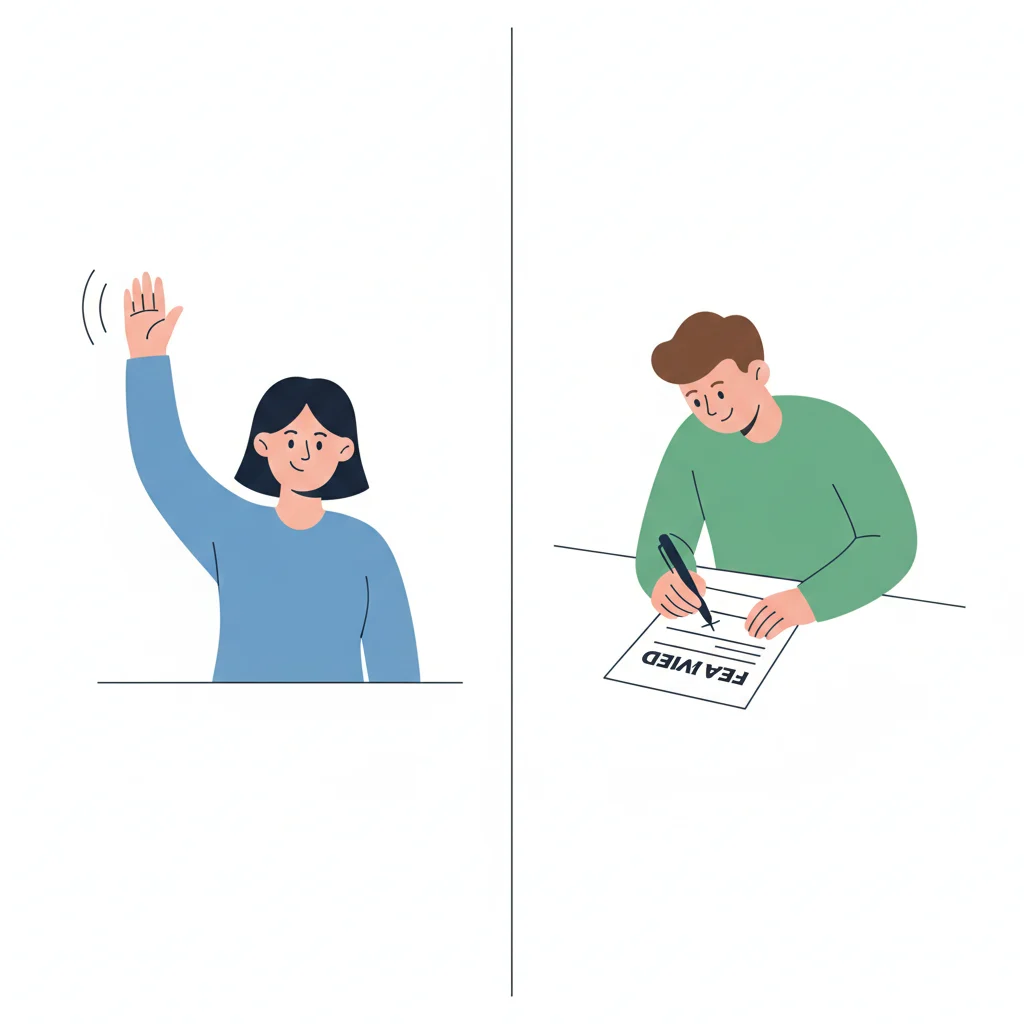
Confused between “waving” and “waiving”? Many students and writers mix these up because they sound similar, but their meanings and uses are completely different. Using the wrong one can make your writing confusing or unprofessional.
In simple terms, “waving” means moving your hand to greet, signal, or attract attention, while “waiving” means giving up a right, claim, or requirement voluntarily.
This guide explains the difference between waving and waiving, shows clear examples in sentences, and provides tips to remember which one to use. By understanding this distinction, you can write confidently, avoid mistakes, and communicate clearly in both formal and informal contexts
🤔 Why Do People Confuse Waving and Waiving?
The confusion between “waving” and “waiving” is one of the most common spelling dilemmas in English. Here’s why so many people mix them up:
| Reason for Confusion | Explanation |
|---|---|
| 🎧 Same Pronunciation | Both words sound identical — /weɪv/ — making them homophones |
| ✍️ Similar Spelling | Only one letter difference: ‘waving’ has ‘v’, ‘waiving’ has ‘i’ before ‘v’ |
| 📚 Both Are Verbs | They function the same grammatically but mean完全不同 things |
| ⏱️ Typing Errors | Fast typing often leads to swapping one for the other |
Real-Life Impact of Getting It Wrong:
Using the wrong word can change your message completely:
| Mistake | What It Sounds Like |
|---|---|
| “The bank is waving my late fee.” | Sounds like the bank is moving its hand at your money |
| “She waived goodbye.” | Sounds like she gave up her right to say goodbye |
| “Please waive your hand.” | Confusing instruction — give up your hand? |
The Good News:
Once you understand the core difference — movement vs. giving up — you’ll never confuse them again. This guide breaks it down simply so you can write with confidence in any situation.
Waving or Waiving
Waving means moving your hand, flag, or object back and forth.
Waiving means giving up a right, fee, rule, or requirement.
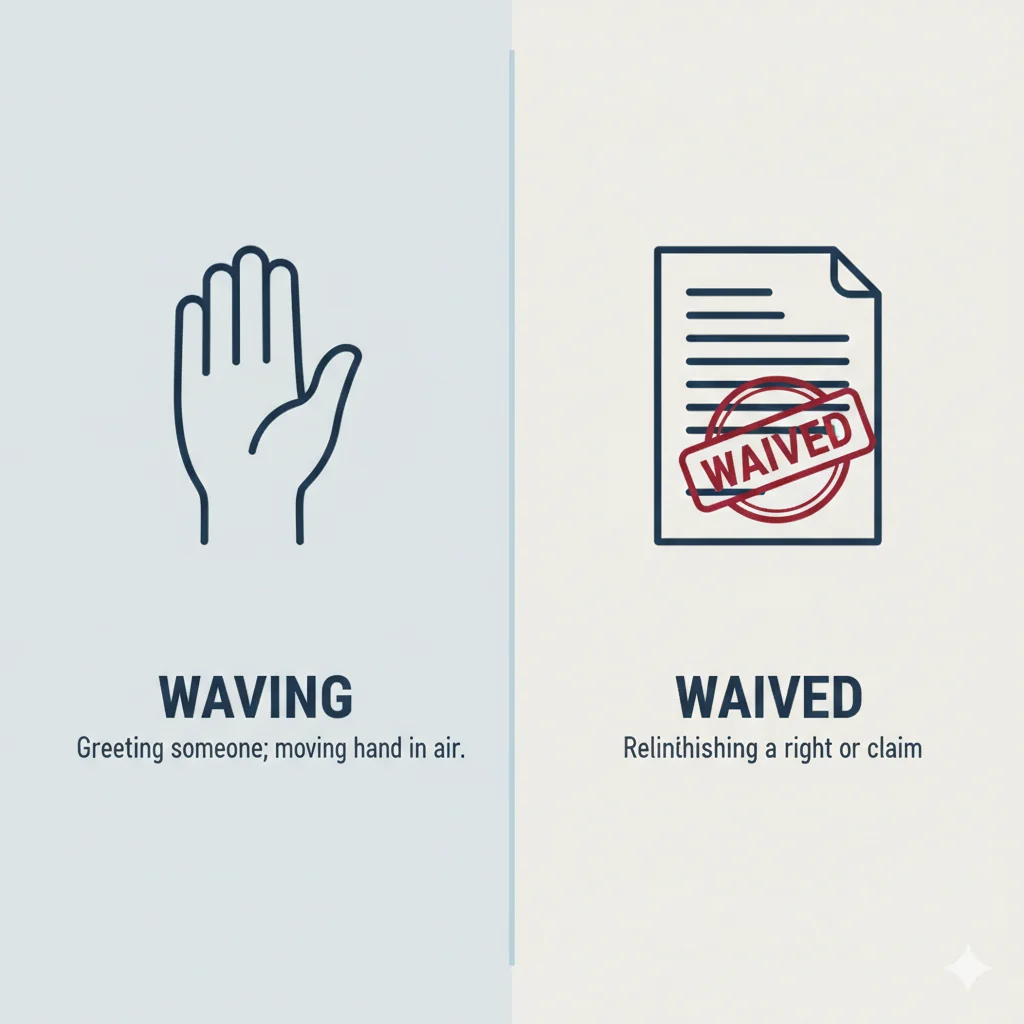
Simple examples:
- She is waving at her friend.
- The company is waiving the cost of delivery.
👉 Key rule:
If it’s about movement, use waving.
If it’s about giving something up, use waiving.
The Origin of Waving or Waiving
The word wave comes from Old English wafian, meaning to move back and forth. That’s why it always relates to motion.
The word waive comes from Old French gaiver, meaning to abandon or give up. Over time, it became a legal and formal term. That’s why phrases like waive off meaning, waive the right meaning, and waive the cost are common in contracts and policies.
The spelling difference exists because these words come from different languages and evolved separately—even though they look similar today.
British English vs American English Spelling
Good news: there is no spelling difference between British and American English for wave and waive. The confusion is about meaning, not region.
| Word | British English | American English | Meaning |
|---|---|---|---|
| Wave | Wave | Wave | Physical movement |
| Waive | Waive | Waive | Give up a right or fee |
📌 Both UK and US English use the same spellings and meanings.
Which Spelling Should You Use?
Choose based on intent, not location.
- US audience: Use waive for legal or business writing.
- UK/Commonwealth: Same rule applies.
- Global audience: When unsure, recheck the meaning.
Ask yourself:
- Am I talking about motion? → Waving
- Am I talking about rights, costs, or rules? → Waiving
Common Mistakes with Waving or Waiving
❌ The hotel is waving the fee.
✅ The hotel is waiving the fee.
❌ He waived at the crowd.
✅ He waved at the crowd.
❌ Is it waiving or wavering?
✅ Wavering means being unsure. It’s a different word.
Waving or Waiving in Everyday Examples

Emails
- “We are waiving the cost due to the inconvenience.”
- “She was waving goodbye.”
News
- “The court is waiving the right to appeal.”
- “Fans were waving flags.”
Social Media
- “Stop waving your phone at the concert!”
- “They are waiving fees for new users.”
Formal Writing
- “The client agreed to waive the right meaning stated in clause 5.”
📝 10 Common Sentences Using Waving and Waiving Correctly
To master the difference between these tricky words, practice with these real-life examples:
Waving (Movement) Examples:
- “The children stood on the corner, waving goodbye to their grandparents.”
- “She was waving a white flag to signal surrender.”
- “I saw him waving frantically from the crowd.”
- “The flag was waving proudly in the wind.”
- “Stop waving your phone around — you’ll drop it!”
Waiving (Giving Up) Examples:
- “The company is waiving the installation fee for new customers.”
- “He decided to waive his right to an attorney.”
- “The school is waiving late registration penalties this semester.”
- “She signed a form to waive liability for the activity.”
- “The landlord agreed to waive this month’s rent due to the flood damage.”
Side-by-Side Comparison:
| Context | Waving (Movement) | Waiving (Giving Up) |
|---|---|---|
| At an airport | Waving goodbye to travelers | Waiving baggage fees for military |
| In court | Waving to the judge (inappropriate!) | Waiving the right to remain silent |
| At a concert | Waving lighters in the air | Waiving ticket fees for students |
| In business | Waving a contract around | Waiving a contract requirement |
Practice Exercise:
Fill in the blank with either “waving” or “waiving”:
- The teacher kept _____ her hand to get attention. → (Answer: waving)
- They are _____ the application fee this month. → (Answer: waiving)
- I saw someone _____ a sign on the corner. → (Answer: waving)
- The tenant requested _____ the pet deposit. → (Answer: waiving)
Waving or Waiving – Google Trends & Usage Data
Search data shows:
- Waiving is most searched in the US, UK, Canada, and Australia, often with legal terms.
- Waving is searched globally, mostly for casual and physical actions.
- Queries like “waive pronunciation”, “waive synonym”, and “what is the difference between waiving and waving?” are increasing.
This shows users want clarity, not just definitions.
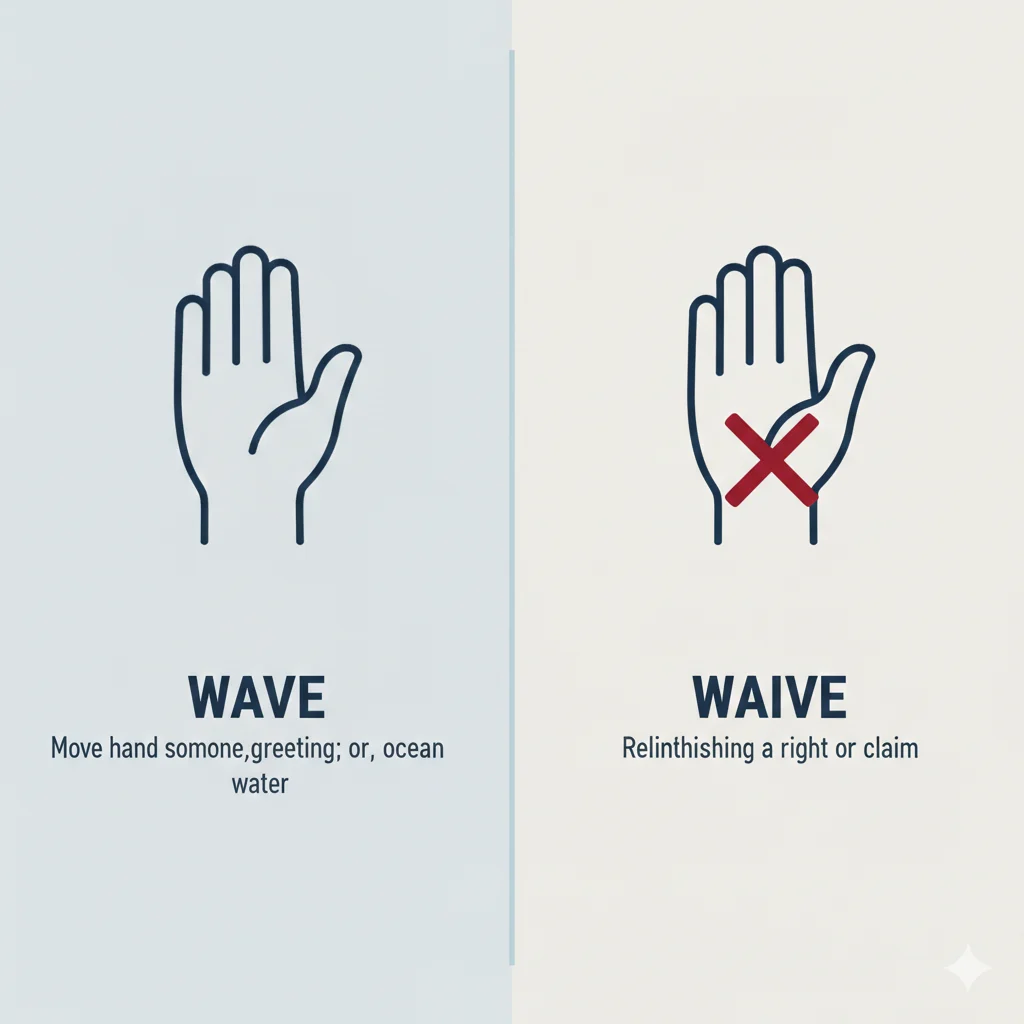
Comparison Table: Waving vs Waiving
| Aspect | Waving | Waiving |
|---|---|---|
| Part of Speech | Verb | Verb |
| Meaning | Physical motion | Giving up something |
| Common Use | Greetings, signals | Law, business |
| Pronunciation | /weɪv/ | /weɪv/ |
| Example | Waving hands | Waiving fees |
🧠 Memory Tricks: How to Never Confuse Waving and Waiving Again
Struggling to remember which is which? These simple memory tricks will help you choose correctly every time:
Trick #1: Look at the Letter “I”
Waiving contains the letter “I” — think of “I give up” or “I waive my rights.”
Waving has no “I” — it’s about outward movement, not yourself.
Trick #2: Wave Your Hand
Physically wave your hand while saying “waving.” The action matches the word.
You can’t physically “waive” anything — it’s an abstract concept.
Trick #3: The “A” Test
| Word | Contains “A” | Connection |
|---|---|---|
| Waving | Yes | Wave your hAnd |
| Waiving | Yes (but with ‘i’) | wAiving = giving up rights |
Trick #4: Legal vs. Casual
| Context | Likely Word |
|---|---|
| Legal document, contract, fees | Waiving |
| Greeting, sports event, celebration | Waving |
Trick #5: Synonym Substitution
Try replacing the word with a synonym:
| If You Mean… | Use This Word |
|---|---|
| Moving, gesturing, signaling | Waving |
| Forgoing, relinquishing, abandoning | Waiving |
Quick Reference Card:
text
┌─────────────────┬─────────────────┐
│    WAVING       │    WAIVING      │
│  (Movement)     │  (Give Up)      │
├─────────────────┼─────────────────┤
│ Wave your hand  │ Waive a fee     │
│ Wave a flag     │ Waive a right   │
│ Wave goodbye    │ Waive a rule    │
│ Wave hello      │ Waive liability │
└─────────────────┴─────────────────┘
Final Tip:
When in doubt, ask yourself: “Is something physically moving, or is someone giving something up?” The answer tells you exactly which word to use.
FAQs About Waving or Waiving
1. Is waiving a word?
Yes. Waiving is the present participle of waive.
2. What is the difference between waiving and waving?
Waving is movement. Waiving is giving up rights or costs.
3. What is waving or waiving rights?
You waive rights, not wave them.
4. Is it waiving or wavering?
Waiving means giving up. Wavering means being unsure.
5. How do you use waive and wave in a sentence?
- “They waived the fee.”
- “She waved her hand.”
6. What is waive pronunciation?
It sounds like wave: /weɪv/.
7. What is a waive synonym?
Forgo, relinquish, abandon, give up.
Q8: Can “waive” be used in everyday conversation, or is it only legal?
A: While “waive” is common in legal and formal contexts, it’s also used in everyday situations. For example:
- “The coffee shop is waiving the charge for refills today.”
- “My gym waived the joining fee as a promotion.”
- “The teacher waived the late homework penalty.”
Q9: Is there a noun form of “waive”?
A: Yes! The noun form is “waiver” — a document or action that gives up a right or requirement.
- “Sign this waiver before joining the gym.”
- “They granted a fee waiver for low-income students.”
- “The waiver of liability protected the company.”
Q10: Is there a noun form of “wave”?
A: Yes! “Wave” itself can be a noun:
- “She gave a friendly wave.”
- “The wave of protesters grew larger.”
- “A wave of emotion swept over him.”
Q11: What’s the past tense of waive and wave?
A: Both are regular verbs:
| Verb | Past Tense | Example |
|---|---|---|
| Wave | Waved | “She waved goodbye.” |
| Waive | Waived | “They waived the requirement.” |
Q12: What does “waiver” mean in insurance?
A: In insurance, a waiver means giving up a specific right or coverage option. Common examples include:
- Waiver of premium — You don’t pay premiums if disabled
- Co-pay waiver — You don’t pay the usual co-payment
- Liability waiver — You agree not to sue for certain injuries
Q13: What does “waive off” meaning?
A: “Waive off” is sometimes used informally to mean cancel or remove something:
- “The restaurant waived off the service charge.”
- “The penalty was waived off due to good behavior.”
However, in formal writing, it’s better to simply use “waive” without “off.”
Q14: Can “wave” be used as a noun in physics?
A: Yes! In science, “wave” refers to energy moving through a medium:
- Sound waves
- Light waves
- Radio waves
- Ocean waves (also literal)
Q15: Do any other words sound like wave/waive?
A: Yes! Be careful with these similar-sounding words:
| Word | Meaning | Example |
|---|---|---|
| Waiver | Giving up a right | “Sign this waiver.” |
| Waver | To be unsure | “She wavered between choices.” |
| Wave | Movement or gesture | “He gave a wave.” |
Conclusion
Understanding the difference between waving / waiving is easier than it seems once you focus on meaning. Waving is always about physical movement—hands, flags, or gestures. Waiving is about choice—giving up a right, cost, rule, or requirement. Even though both words sound the same, their use depends on context, not spelling style or region.
This distinction matters in professional writing, legal documents, emails, and everyday communication. Using the wrong word can confuse readers or change the meaning of a sentence. Remember simple cues like waive the cost, waive the right, and wave your hand. When in doubt, ask whether something is moving or being given up.
With this guide, you now have a quick answer, deep explanation, examples, and usage tips—all in one place. No more second-guessing.
📚 Practice Worksheet: Test Your Knowledge of Waving vs Waiving
Want to make sure you’ve mastered the difference? Try this quick practice exercise:
Part 1: Fill in the Blank
Choose either “waving” or “waiving” for each sentence:
- The crowd started _____ their hands in excitement.
- The bank is _____ the overdraft fee for new customers.
- She kept _____ until the taxi disappeared from view.
- He signed a form _____ his right to appeal.
- The flags were _____ in the strong breeze.
- The school is _____ tuition for military families.
- I saw someone _____ a sign on the highway overpass.
- They agreed to _____ the liability for the event.
Answers: 1. waving, 2. waiving, 3. waving, 4. waiving, 5. waving, 6. waiving, 7. waving, 8. waiving
Part 2: Identify the Mistake
Each sentence below contains an error. Rewrite it correctly:
- “The hotel is waving the resort fee this weekend.”
→ Correct: “The hotel is waiving the resort fee this weekend.” - “She waived at her friend across the street.”
→ Correct: “She waved at her friend across the street.” - “Please sign this wavier before participating.”
→ Correct: “Please sign this waiver before participating.” - “He kept wavering his hand to get attention.”
→ Correct: “He kept waving his hand to get attention.”
Part 3: Create Your Own Sentences
Write one sentence using “waving” and one using “waiving”:
- Waving (movement): _________________________________
- Waiving (giving up): _________________________________
Quick Self-Check:
| If your sentence involves… | You probably need… |
|---|---|
| Hand, flag, greeting, goodbye | Waving |
| Fee, right, rule, requirement | Waiving |
| Uncertainty, hesitation | Wavering (different word!) |

Rhonda Byrne inspires millions through her teachings on The Law of Attraction and the power of positive thought. Her insights on angel numbers reveal how gratitude and mindset align us with divine guidance.