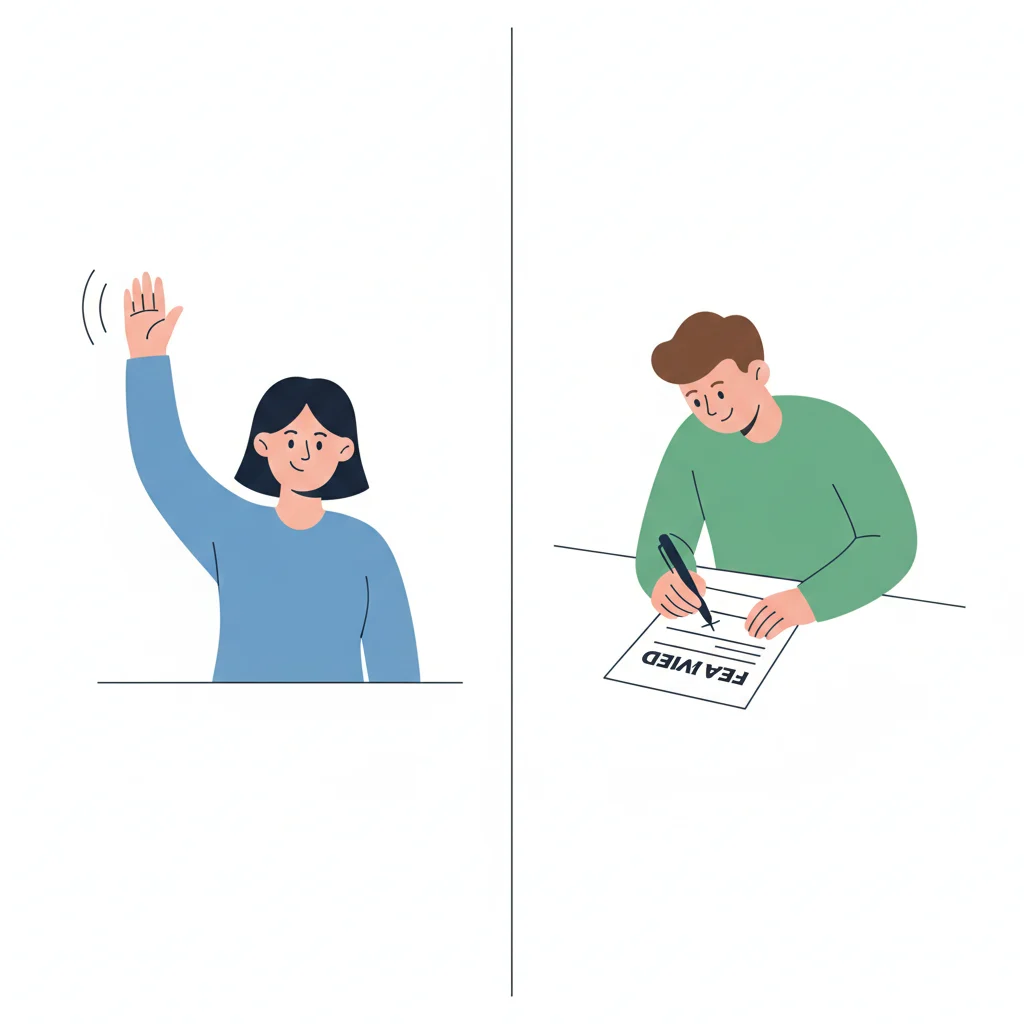
Have you ever paused while writing an email and wondered: Is it waving or waiving? You’re not alone. This pair of words confuses thousands of people every day. They look almost the same, sound similar, and yet mean completely different things. That confusion is exactly why people search for “waving / waiving” online.
The problem usually appears in legal, business, and formal writing. People often mean waive the cost or waive the right, but accidentally write wave. Others ask questions like “Is waiving a word?”, “What is waving or waiving rights?”, or “Is it waiving or wavering?” These small spelling mistakes can change the meaning of a sentence and even cause serious misunderstandings.
This article clears everything up in plain, simple language. You’ll get a quick answer, real-life examples, spelling rules, pronunciation tips, and professional advice. By the end, you’ll know exactly when to use waving and when to use waiving—with confidence.
Waving or Waiving
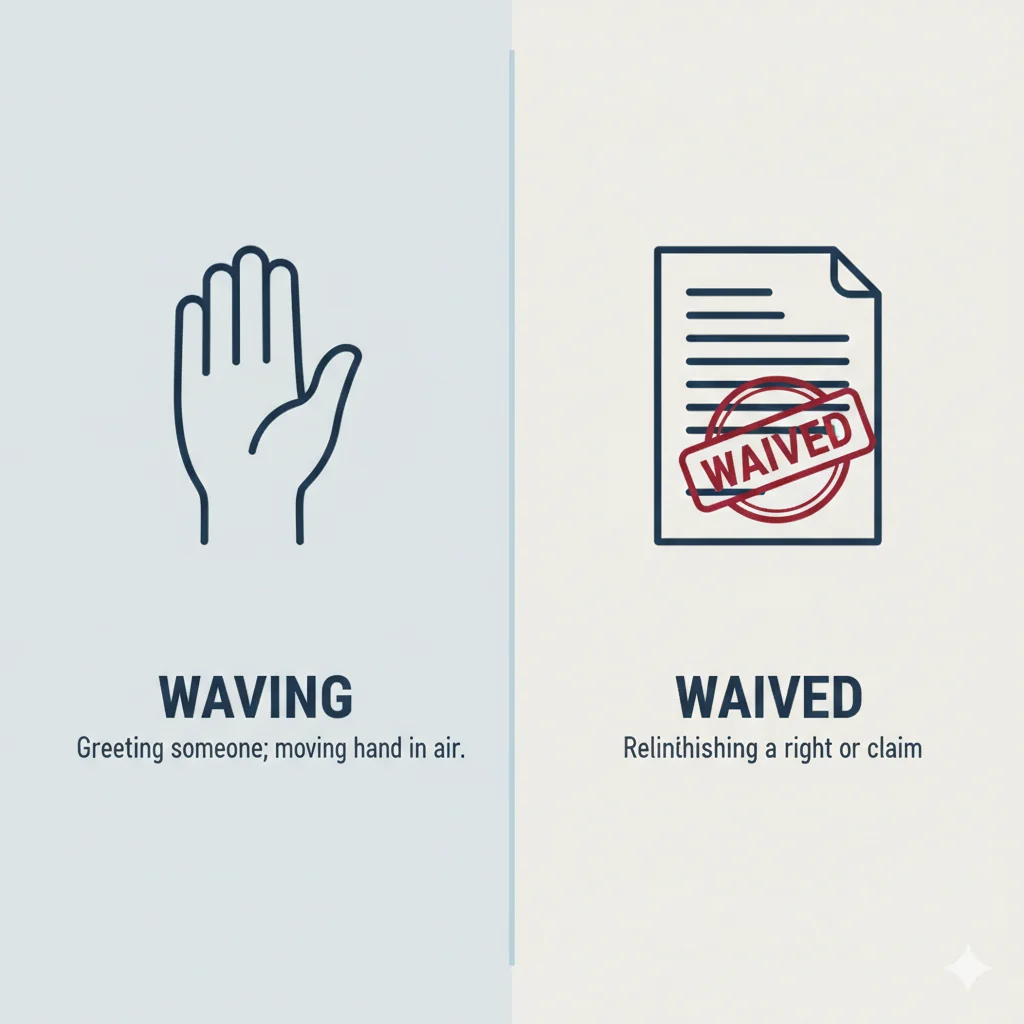
Waving means moving your hand, flag, or object back and forth.
Waiving means giving up a right, fee, rule, or requirement.
Simple examples:
- She is waving at her friend.
- The company is waiving the cost of delivery.
👉 Key rule:
If it’s about movement, use waving.
If it’s about giving something up, use waiving.
The Origin of Waving or Waiving
The word wave comes from Old English wafian, meaning to move back and forth. That’s why it always relates to motion.
The word waive comes from Old French gaiver, meaning to abandon or give up. Over time, it became a legal and formal term. That’s why phrases like waive off meaning, waive the right meaning, and waive the cost are common in contracts and policies.
The spelling difference exists because these words come from different languages and evolved separately—even though they look similar today.
British English vs American English Spelling
Good news: there is no spelling difference between British and American English for wave and waive. The confusion is about meaning, not region.
| Word | British English | American English | Meaning |
|---|---|---|---|
| Wave | Wave | Wave | Physical movement |
| Waive | Waive | Waive | Give up a right or fee |
📌 Both UK and US English use the same spellings and meanings.
Which Spelling Should You Use?
Choose based on intent, not location.
- US audience: Use waive for legal or business writing.
- UK/Commonwealth: Same rule applies.
- Global audience: When unsure, recheck the meaning.
Ask yourself:
- Am I talking about motion? → Waving
- Am I talking about rights, costs, or rules? → Waiving
Common Mistakes with Waving or Waiving
❌ The hotel is waving the fee.
✅ The hotel is waiving the fee.
❌ He waived at the crowd.
✅ He waved at the crowd.
❌ Is it waiving or wavering?
✅ Wavering means being unsure. It’s a different word.
Waving or Waiving in Everyday Examples

Emails
- “We are waiving the cost due to the inconvenience.”
- “She was waving goodbye.”
News
- “The court is waiving the right to appeal.”
- “Fans were waving flags.”
Social Media
- “Stop waving your phone at the concert!”
- “They are waiving fees for new users.”
Formal Writing
- “The client agreed to waive the right meaning stated in clause 5.”
Waving or Waiving – Google Trends & Usage Data
Search data shows:
- Waiving is most searched in the US, UK, Canada, and Australia, often with legal terms.
- Waving is searched globally, mostly for casual and physical actions.
- Queries like “waive pronunciation”, “waive synonym”, and “what is the difference between waiving and waving?” are increasing.
This shows users want clarity, not just definitions.
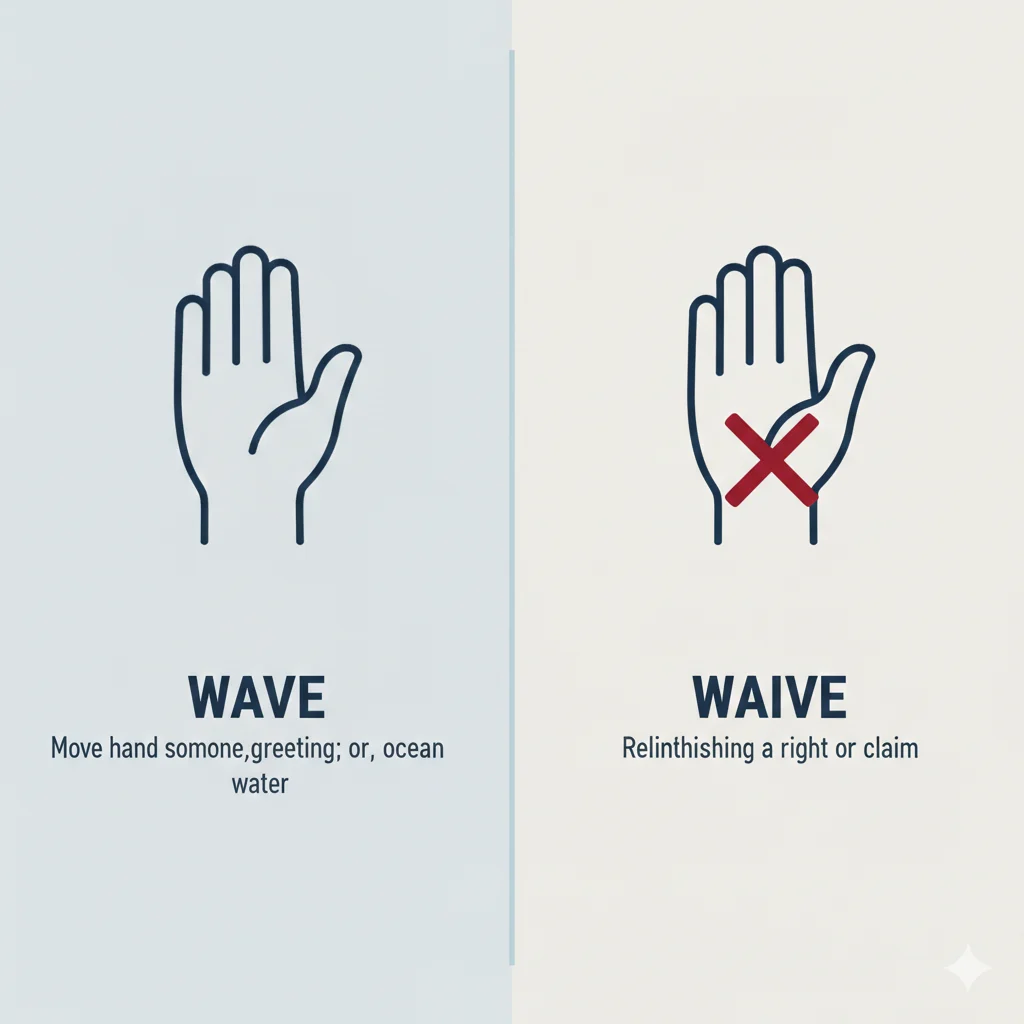
Comparison Table: Waving vs Waiving
| Aspect | Waving | Waiving |
|---|---|---|
| Part of Speech | Verb | Verb |
| Meaning | Physical motion | Giving up something |
| Common Use | Greetings, signals | Law, business |
| Pronunciation | /weɪv/ | /weɪv/ |
| Example | Waving hands | Waiving fees |
FAQs About Waving or Waiving
1. Is waiving a word?
Yes. Waiving is the present participle of waive.
2. What is the difference between waiving and waving?
Waving is movement. Waiving is giving up rights or costs.
3. What is waving or waiving rights?
You waive rights, not wave them.
4. Is it waiving or wavering?
Waiving means giving up. Wavering means being unsure.
5. How do you use waive and wave in a sentence?
- “They waived the fee.”
- “She waved her hand.”
6. What is waive pronunciation?
It sounds like wave: /weɪv/.
7. What is a waive synonym?
Forgo, relinquish, abandon, give up.
Conclusion
Understanding the difference between waving / waiving is easier than it seems once you focus on meaning. Waving is always about physical movement—hands, flags, or gestures. Waiving is about choice—giving up a right, cost, rule, or requirement. Even though both words sound the same, their use depends on context, not spelling style or region.
This distinction matters in professional writing, legal documents, emails, and everyday communication. Using the wrong word can confuse readers or change the meaning of a sentence. Remember simple cues like waive the cost, waive the right, and wave your hand. When in doubt, ask whether something is moving or being given up.
With this guide, you now have a quick answer, deep explanation, examples, and usage tips—all in one place. No more second-guessing.

Rhonda Byrne inspires millions through her teachings on The Law of Attraction and the power of positive thought. Her insights on angel numbers reveal how gratitude and mindset align us with divine guidance.