English learners and even native speakers often stop and think when choosing went or gone. You might hear someone say, “I have went to the market,” and instantly feel something is off—but why? This confusion happens because went and gone both come from the verb go, yet they are used in different grammar situations.
People search for went / gone because they want a quick answer, clear grammar rules, and real examples they can trust.
The problem is simple: went is a past tense verb, while gone is a past participle. They cannot replace each other freely. Using the wrong one can make your sentence sound incorrect, unprofessional, or confusing—especially in exams, emails, and formal writing. This article solves that confusion step by step.
You’ll learn the meaning of go went gone, when to use went or gone, common mistakes, and real-life examples. By the end, you’ll confidently use went / gone grammar without second-guessing.
Went or Gone means
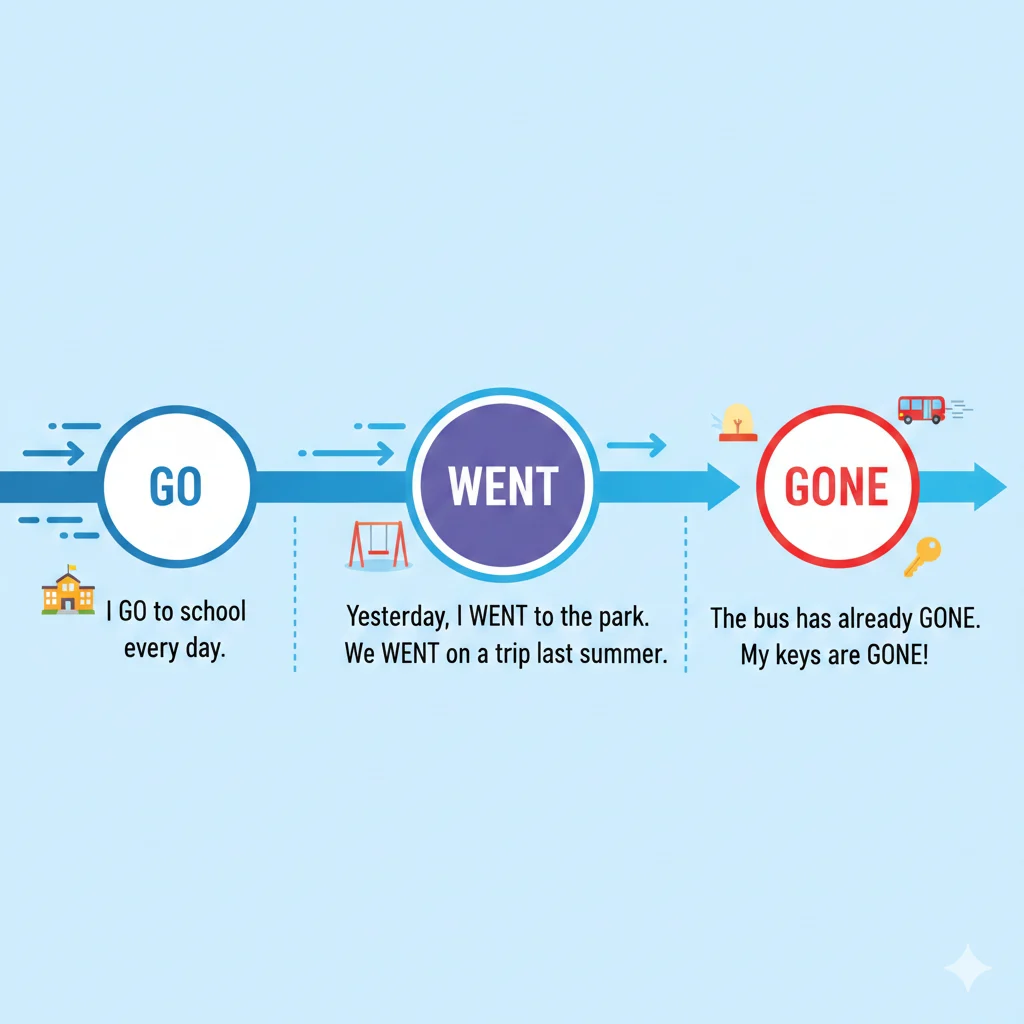
Went is the simple past tense of go.
Gone is the past participle of go and is used with helping verbs like has, have, had.
Examples:
- I went to school yesterday.
- She has gone to school already.
👉 If there is no helping verb, use went.
👉 If there is has/have/had, use gone.
This single rule solves most went gone grammar problems.
The Origin of Went or Gone
The verb go comes from Old English gān, meaning “to move or travel.” Interestingly, went did not originally belong to go. It came from another verb, wend, meaning “to turn or move.” Over time, English speakers adopted went as the past tense of go.
Gone comes from gegan, the past participle form. That’s why English has:
- Go (present)
- Went (past tense)
- Gone (past participle)
This unusual history explains why learners struggle with why go went gone instead of go goed gone.
British English vs American English Usage
Good news: British and American English use went and gone the same way. There is no spelling difference, only usage.
| Form | British English | American English | Example |
|---|---|---|---|
| Go | Go | Go | I go daily |
| Went | Went | Went | I went yesterday |
| Gone | Gone | Gone | I have gone |
Both follow the same grammar rules, so global English learners can relax here.
Which Form Should You Use?
Your choice depends on sentence structure, not accent.
- Use went for past actions with a time reference
I went home last night. - Use gone when the action affects the present
He has gone home.
Audience-based advice:
- US audience: Follow standard past vs participle rules
- UK/Commonwealth: Same rules apply
- Global English: Stick to textbook grammar—never use has went
Common Mistakes with Went or Gone
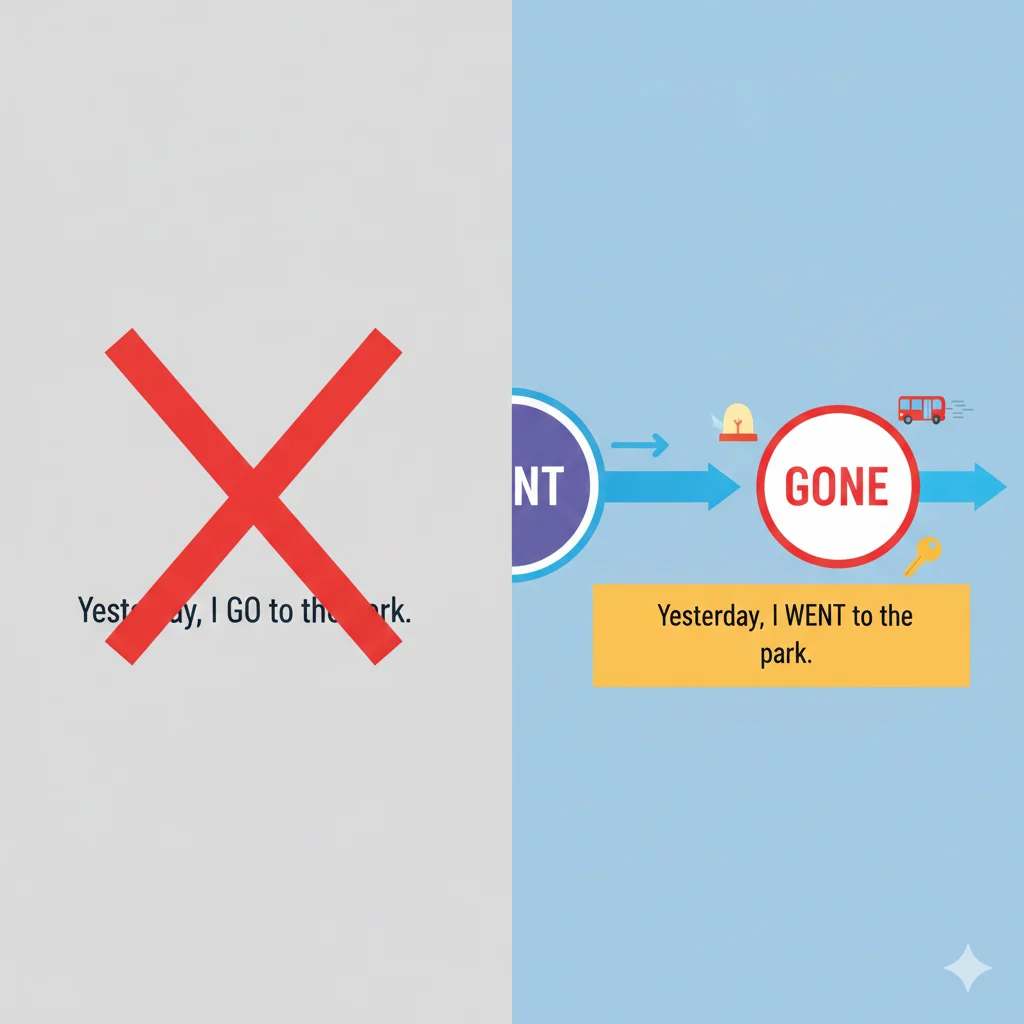
These errors appear frequently in exams and daily speech:
❌ I have went to the office.
✅ I have gone to the office.
❌ She gone to school yesterday.
✅ She went to school yesterday.
❌ Has went he there?
✅ Has he gone there?
👉 Has went is incorrect in standard English.
Went or Gone in Everyday Examples
Emails
- I went through your email yesterday.
- The files have gone missing.
News
- The minister went abroad last week.
- Prices have gone up again.
Social Media
- Just went to the gym 💪
- He has gone viral overnight!
Formal Writing
- The committee went through the proposal.
- Several documents have gone under review.

Went or Gone – Google Trends & Usage Data
Search data shows people often type:
- gone past tense
- went present tense
- when to use went or gone
This tells us learners want clarity, not theory. Searches spike during:
- Exam seasons
- English test prep
- Job application writing
Countries with high search interest include India, Pakistan, the UK, and the US—proving this is a global grammar issue.
Went or Gone Comparison Table
| Aspect | Went | Gone |
|---|---|---|
| Tense | Past tense | Past participle |
| Helping verb | No | Yes |
| Example | I went home | I have gone home |
| Grammar role | Action completed | Result/state |
Frequently Asked Questions (FAQs)
1. What is the meaning of went gone?
They are forms of go. Went is past tense, gone is past participle.
2. Is “gone” past tense?
No. Gone past tense is incorrect. Went is the past tense.
3. What is went present tense?
Went present tense is wrong. The present tense is go.
4. When to use went or gone?
Use went without helping verbs. Use gone with has/have/had.
5. Has went is correct?
No. Has went is incorrect. Always say has gone.
6. Went gone in a sentence examples?
- I went to the park.
- She has gone to the park.
7. Why go went gone is irregular?
Because English borrowed forms from different verbs over time.
Conclusion
Understanding went or gone grammar is easier than it looks once you focus on structure instead of memorization. Remember the core rule: went works alone as the past tense, while gone needs a helping verb. This distinction explains most errors and instantly improves your writing. Whether you’re preparing for exams, writing emails, posting online, or speaking confidently, choosing the correct form makes your English sound natural and professional.
The confusion around go went gone meaning comes from English history, not from you. With clear examples, everyday usage, and awareness of common mistakes, you can now decide correctly every time. Keep this guide as a reference, and soon went or gone will feel automatic—not stressful.

Neville Goddard was a visionary spiritual philosopher whose teachings on imagination and consciousness continue to transform lives. His work reveals how our thoughts create reality and how faith shapes destiny. On this angel number site, Neville’s perspective deepens our understanding of divine numbers — showing how each sequence mirrors our inner beliefs and the creative power of the mind.