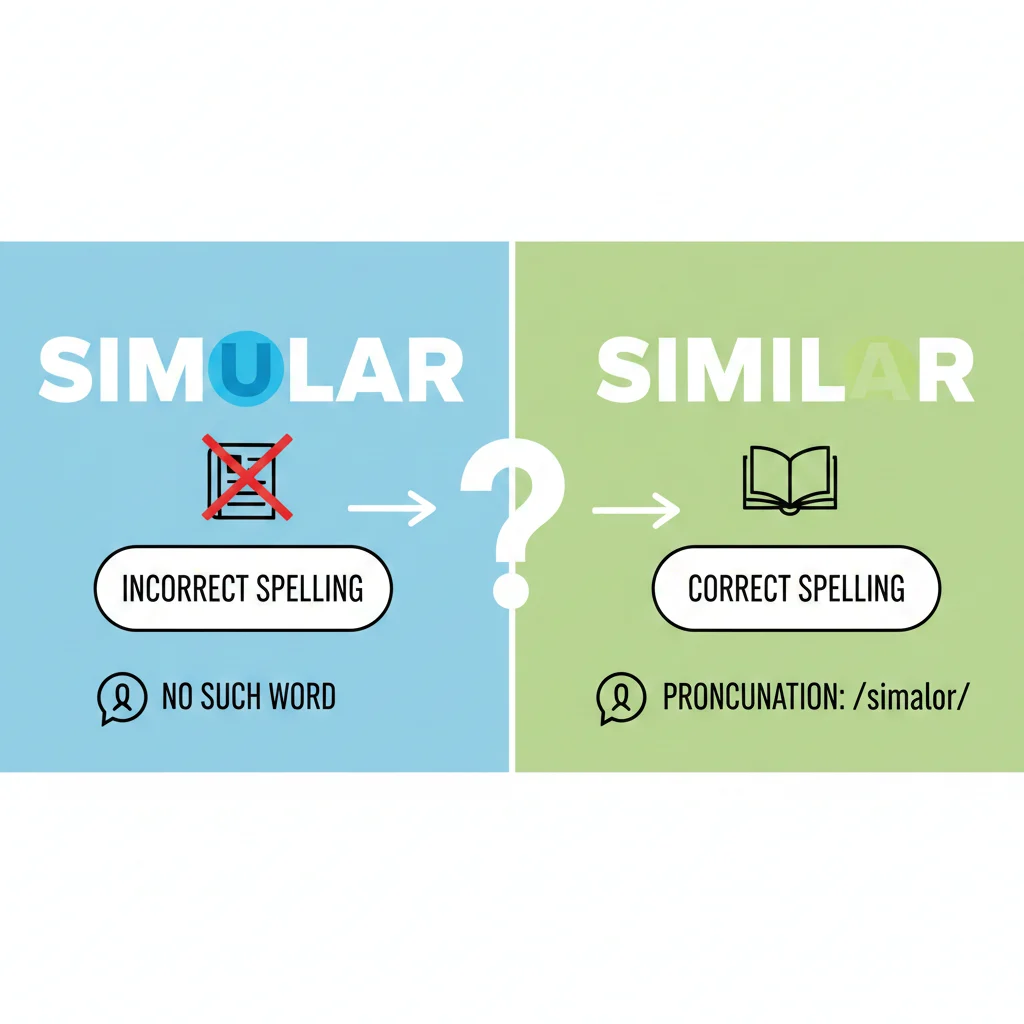
Have you ever typed simular instead of similar and wondered, “Is simular a word?” You’re not alone. Millions of people confuse these words because they sound very similar but have very different usage. People often search for simular pronunciation, simular in English, similar in a sentence, and similar synonym to clarify this confusion.
The truth is: similar is the modern, standard adjective meaning “alike” or “comparable.” Simular is archaic, historically meaning “one who simulates” or “counterfeit,” and is no longer used in everyday English. Mispronunciation often leads to the common mistake of writing simular.
This article will give you a quick answer, explore the word’s origin, highlight British vs American spelling, show everyday examples, cover common mistakes, and explain Google search trends. By the end, you’ll never confuse similar and simular again.
Simular or Similar means
- Similar ✅ – Standard English adjective meaning “alike” or “comparable.”
- Simular ⚠️ – Archaic noun meaning “one who simulates,” rarely used today.
Examples:
- Correct: The two paintings are similar in style.
- Incorrect: The two paintings are simular in style.
Tip: Whenever you hear simular, replace it with similar for correct usage.
The Origin of Simular or Similar

- Similar comes from Latin similis, meaning “like” or “resembling.” Related words include simile and similarity.
- Simular was historically used as a noun, meaning “one who simulates” or “counterfeit.” Over time, this form became archaic, surviving mostly in old texts.
- Mispronunciation, like sim-ye-ler, led to people typing simular mistakenly, a phenomenon linguists call an eggcorn.
Historical context: Both words share a Latin root, but only similar survived as the modern adjective. Today, simular is mostly a spelling error if used in everyday writing.
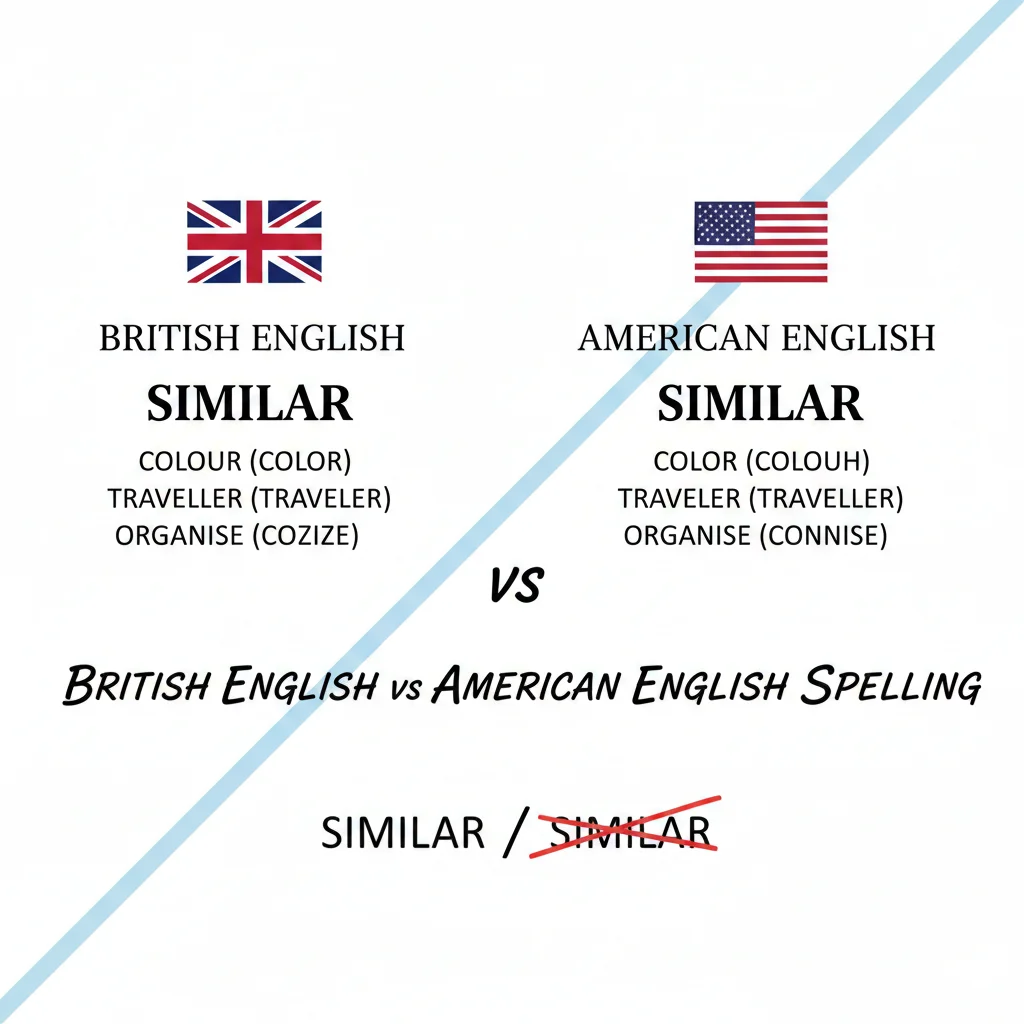
British English vs American English Spelling
Unlike words like colour vs color, similar is spelled the same in both British and American English.
| Word | UK English | US English | Notes |
|---|---|---|---|
| similar | ✔️ | ✔️ | Standard spelling in all regions |
| simular | ❌ | ❌ | Only archaic noun usage; incorrect as adjective |
Takeaway: There is no UK vs US variation; always use similar for adjectives.
Which Spelling Should You Use?
- US audiences: Always use similar in essays, emails, social media, reports, and schoolwork.
- UK/Commonwealth audiences: Same advice — similar is standard.
- English learners: Memorize similar; ignore simular except for historical study.
Tip: If in doubt, writing similar is always correct.
Common Mistakes with Simular or Similar
Many people type simular instead of similar because of how it sounds. Here are the most common mistakes and corrections:
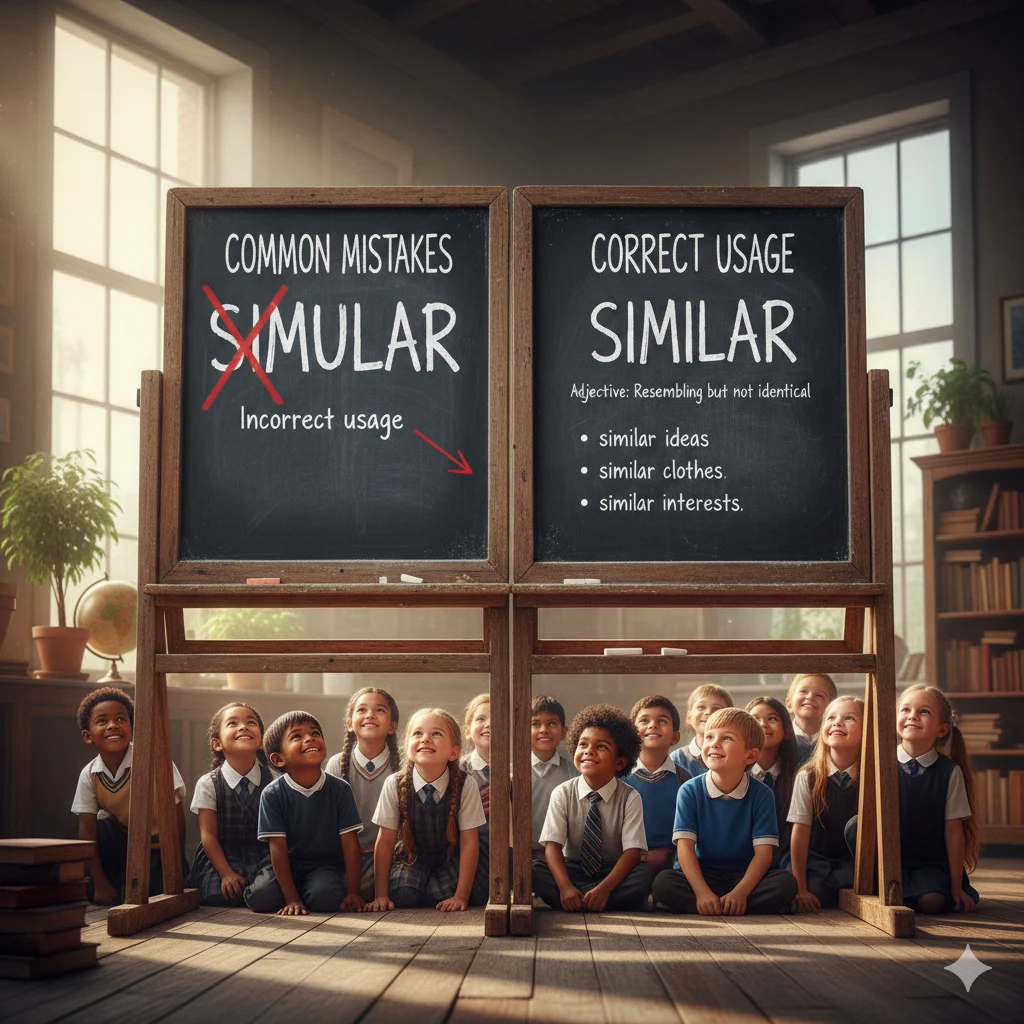
| Incorrect | Correct | Explanation |
|---|---|---|
| She has a simular dress. | She has a similar dress. | Common misspelling from pronunciation |
| These are similiar ideas. | These are similar ideas. | Avoid adding extra letters |
| Is “simular” a word? | “Similar” is correct; “simular” is archaic | Clarifies confusion |
| Similar vs similarly | Similar = adjective; Similarly = adverb | Grammar distinction |
Tip: Always type similar unless referring to historical or archaic texts.
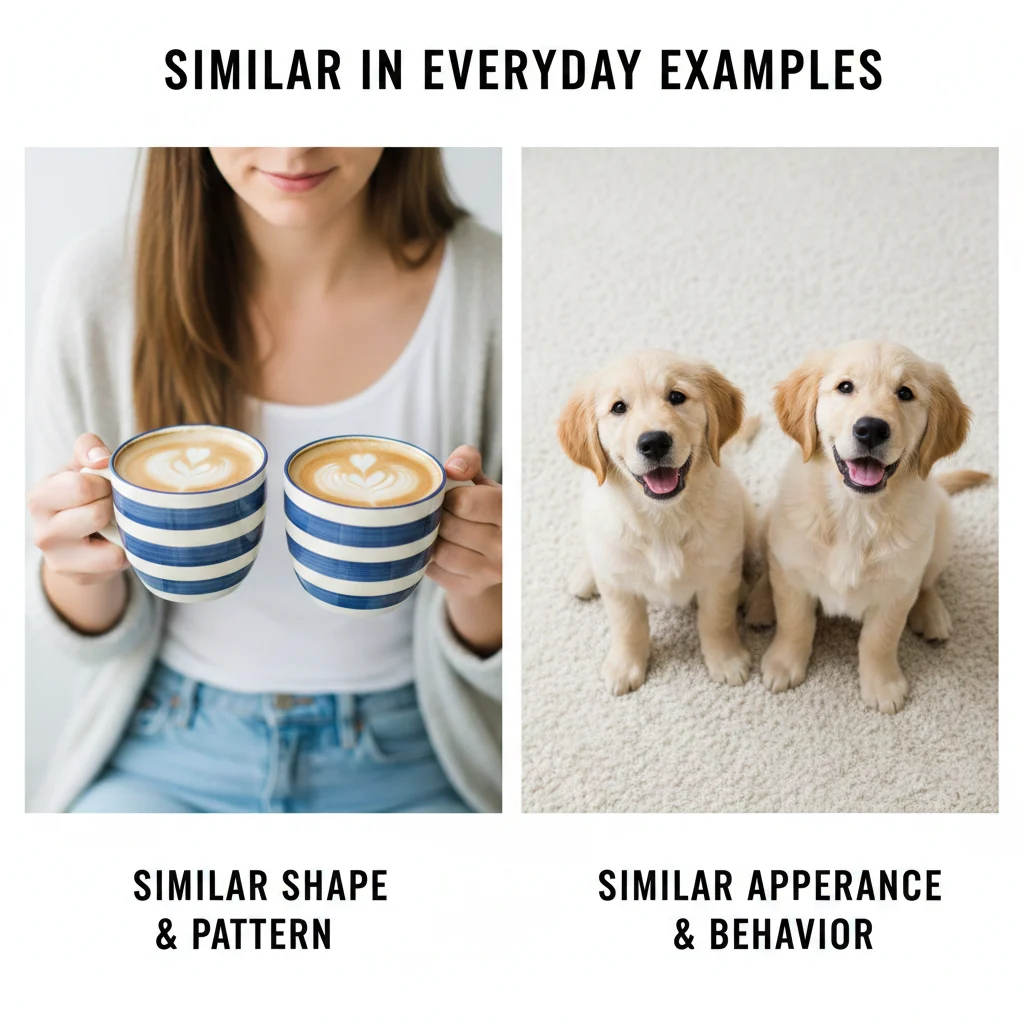
Simular or Similar in Everyday Examples
1. Emails
- Correct: Your proposal is similar to last month’s project.
2. Social Media
- Correct: This meme is similar to the one I posted yesterday.
3. Academic Writing
- Correct: The two experiments produced similar results.
4. News / Formal Writing
- Correct: Government policies are similar to neighboring countries’ approaches.
Simular or Similar – Google Trends & Usage Data
- Similar is searched far more frequently than simular.
- Simular spikes mainly in queries like:
- “Is simular a word?”
- “Simular vs similar meaning”
- Mispronunciation contributes to frequent typing errors online.
Observation: This shows there is high user interest, making your article valuable for Google searches.
🔍 Comparison Table
| Variation | Meaning | Correct Today? | Notes |
|---|---|---|---|
| similar | alike, comparable | ✔️ | Standard adjective |
| simular | one who simulates (archaic) | ⚠️ | Historical, rarely used today |
| similar pronunciation | how the word sounds | ✔️ | Phonetics context |
| similar synonym | words with similar meaning | ✔️ | Examples: alike, related, comparable |
| similar UK spelling | British spelling | ✔️ | Always “similar” |
| similar in a sentence | usage example | ✔️ | Shows correct context |
FAQs About Simular or Similar
- Is “simular” a word?
Only historically; in modern English, always use similar. - What is the difference between simular and similar?
Simular = archaic noun “one who simulates.” Similar = adjective meaning “alike.” - Which is correct: similar or similiar?
Correct spelling: similar. Similiar is incorrect. - Why do people say simular instead of similar?
Due to simular pronunciation; the brain matches the spelling to the sound. - When to use similar vs similarly?
- Similar = adjective: These ideas are similar.
- Similarly = adverb: Similarly, the results improved.
- What are synonyms of similar?
Alike, comparable, equivalent, related, almost identical. - Can I see simular used anywhere?
Only in archaic texts discussing simulation or imitation.
Tip: Implement FAQ schema markup on your site to increase snippet visibility.
Conclusion
The difference between similar and simular is simple once you understand it:
- Similar is the modern, correct adjective, meaning “alike” or “comparable.”
- Simular is archaic, rarely used today, historically meaning “one who simulates.”
Most errors occur because of simular pronunciation, which leads people to spell it incorrectly. Remember:
- Use similar in all modern writing.
- Learn synonyms like alike, comparable, related to expand vocabulary.
- Avoid adding extra letters or typing “simular” unless referencing historical texts.
- Apply correct usage in emails, social media, academic writing, and news.
By following these tips, your writing will be clear, professional, and error-free, and you’ll handle all similar vs simular situations with confidence.

Rhonda Byrne inspires millions through her teachings on The Law of Attraction and the power of positive thought. Her insights on angel numbers reveal how gratitude and mindset align us with divine guidance.