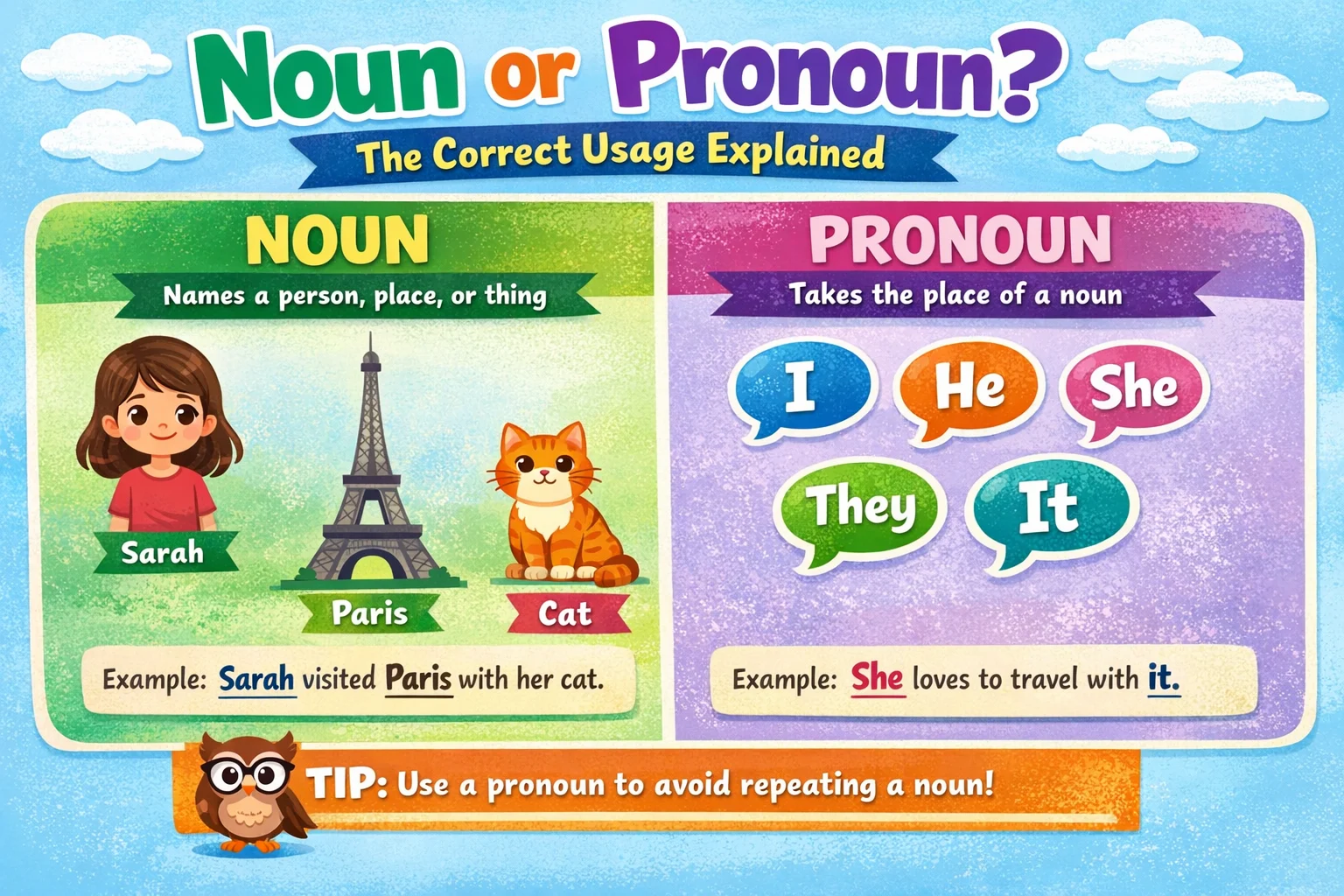
Confused between “noun” and “pronoun”? These are two fundamental parts of speech in English, but they serve very different purposes. Using the wrong one can make sentences confusing or grammatically incorrect.
- “Noun” is a word that names a person, place, thing, or idea. Example: “The dog ran across the park.”
- “Pronoun” is a word that replaces a noun to avoid repetition. Example: “The dog ran across the park. It was very fast.”
This guide explains the difference between nouns and pronouns, provides clear examples, and gives tips to remember how to use each correctly. Understanding this distinction helps you write clearly, accurately, and confidently.
Noun or Pronoun Means
A noun names a person, place, thing, or idea.
A pronoun replaces a noun to avoid repetition.
Examples:
- Nouns: Ali, school, happiness, city, book
- Pronouns: he, she, it, they, his
Usage:
- Noun: Ali loves reading books.
- Pronoun: He loves reading them.
Tip: Ask “Who or what is it?” If it names something, it’s a noun. If it replaces that noun, it’s a pronoun.
H3 Examples:
- Common Noun Examples: city, car, happiness
- Common Pronoun Examples: he, she, it, they, us
The Origin of Noun or Pronoun
- Noun comes from Latin nomen, meaning “name.”
- Pronoun comes from Latin pronomen, meaning “for a noun.”
English borrowed these terms from Latin, French, and Germanic languages. Early English texts often used pronouns inconsistently, which led to modern grammar rules.
British English vs American English Spelling
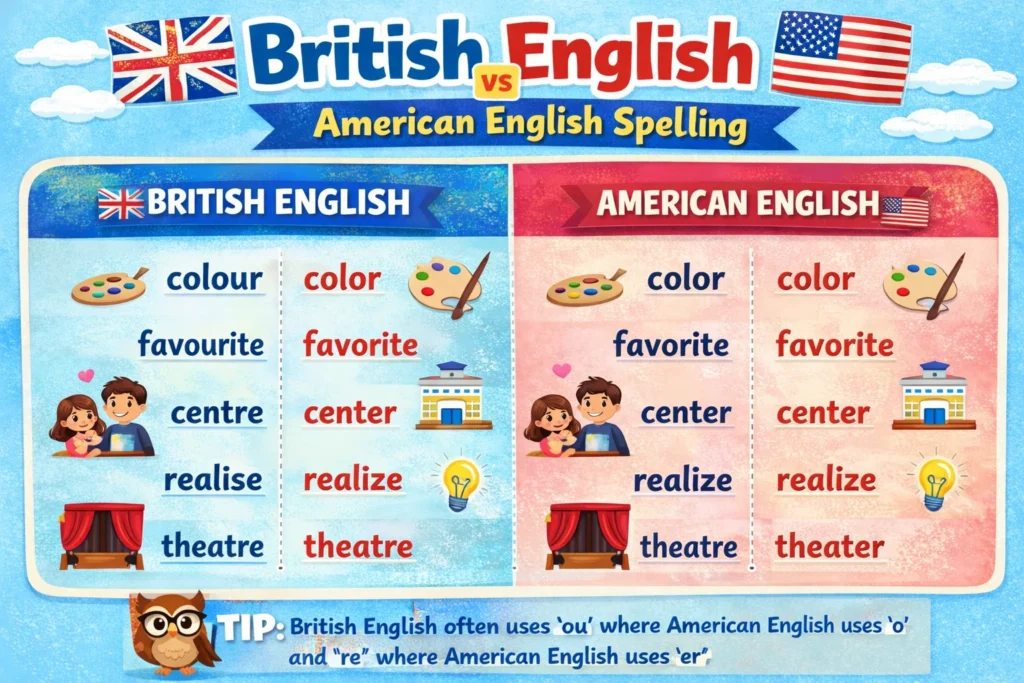
Grammar terms like noun and pronoun are the same in UK and US English. However, related words like studying/studing or practice/practise differ.
| Word/Phrase | British English | American English | Notes |
|---|---|---|---|
| Studying / Studing | studying ✅ | studying ✅ | “Studing” is incorrect |
| Practice / Practise | practise (verb) | practice (verb & noun) | Common confusion |
| Noun | noun | noun | Same spelling |
| Pronoun | pronoun | pronoun | Same spelling |
| Grammar | programme | program | Minor difference |
Tip: For global content, American spelling is safer, but nouns and pronouns remain unchanged.
Which Spelling Should You Use?
- US Audience: Use American spelling (practice).
- UK/Commonwealth: Use British spelling (practise for verbs).
- Global Audience: Standard forms like noun and pronoun are safe worldwide.
Pro Tip: Always double-check if related words differ in UK vs US to avoid mistakes in formal writing.
Common Mistakes with Noun or Pronoun
- Studing vs Studying: Correct: studying.
- Confusing pronouns with nouns:
- Wrong: Him went to school.
- Correct: He went to school.
- Overusing nouns:
- Wrong: Ali went to school. Ali liked Ali’s school.
- Correct: Ali went to school. He liked it.
- Pronoun-verb mismatch:
- Wrong: They is happy.
- Correct: They are happy.
- Misplaced possessive pronouns:
- Wrong: His is book new.
- Correct: His book is new.
- Using informal pronouns in formal writing: Avoid you; use one.
Noun or Pronoun in Everyday Examples
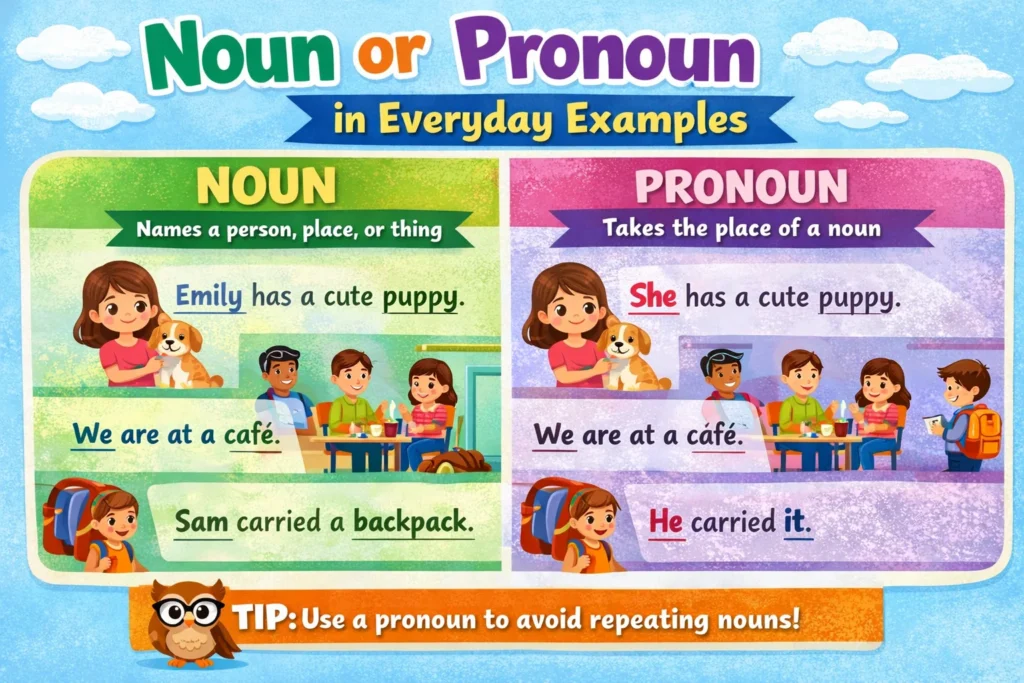
Emails:
- Correct: She will send the report today.
- Incorrect: The report will send by Sarah today.
News:
- Correct: The president announced his new policy.
- Incorrect: President announced president new policy.
Social Media:
- Correct: They love this movie!
- Incorrect: The friends love this movie!
Formal Writing:
- Correct: Happiness is achieved when one focuses on self-improvement.
- Incorrect: Happiness is achieved when you focus on happiness.
8 Pillars of Grammar & 4 Types of Words
8 Pillars of Grammar:
- Nouns
- Pronouns
- Verbs
- Adjectives
- Adverbs
- Prepositions
- Conjunctions
- Interjections
4 Types of Words:
- Nouns, pronouns, verbs, adjectives – the core building blocks of English.
Tip: Knowing these pillars helps you identify nouns and pronouns in complex sentences.
Noun or Pronoun – Google Trends & Usage
Google searches show growing interest in:
- Noun or pronoun examples
- Noun or pronoun list
- Is my noun pronoun?
- They noun or pronoun?
Most searches come from India, Pakistan, the UK, and the US, showing high demand for practical grammar guidance.
Keyword Variations Comparison Table
| Variation | Example | Correct Use | Notes |
|---|---|---|---|
| Noun or pronoun examples | Ali, school / he, it | ✅ | Quick practice for learners |
| Noun or pronoun list | Names of objects and pronouns | ✅ | Useful for worksheets |
| You noun or pronoun | You are kind | ✅ | Pronoun replacing noun |
| They noun or pronoun | They are happy | ✅ | Plural pronoun example |
| His noun or pronoun | His book is new | ✅ | Possessive pronoun example |
FAQs
1. What are noun and pronoun examples?
Nouns name people, places, or things. Pronouns replace nouns. Example: Ali → he, book → it.
2. What are the 8 pillars of grammar?
Nouns, pronouns, verbs, adjectives, adverbs, prepositions, conjunctions, interjections.
3. What are the 4 types of words?
Nouns, pronouns, verbs, adjectives – core building blocks of English.
4. Is it studying or studing?
Correct: studying.
5. How do I know if it’s my noun pronoun?
Check if it replaces a previously mentioned noun.
6. Can pronouns be plural?
Yes – examples: they, them, these.
7. Are nouns and pronouns used differently in formal writing?
Yes. Nouns introduce subjects; pronouns avoid repetition.
8. Where can I find a noun or pronoun list?
Grammar books, English learning websites, and worksheets.
9. Can nouns and pronouns appear in the same sentence?
Yes – Ali (noun) loves school. He (pronoun) visits it daily.
Conclusion
Understanding noun or pronoun is key to fluent, professional English. Nouns name, pronouns replace. Avoid studing, overusing nouns, or misusing pronouns. Use tables, examples, and lists for practice. British vs American spelling differences exist, but nouns and pronouns are consistent globally. Apply the 8 pillars of grammar and 4 types of words to strengthen your writing. Practicing real-life examples in emails, social media, news, and formal writing ensures accuracy, clarity, and fluency.