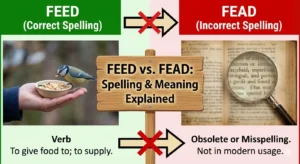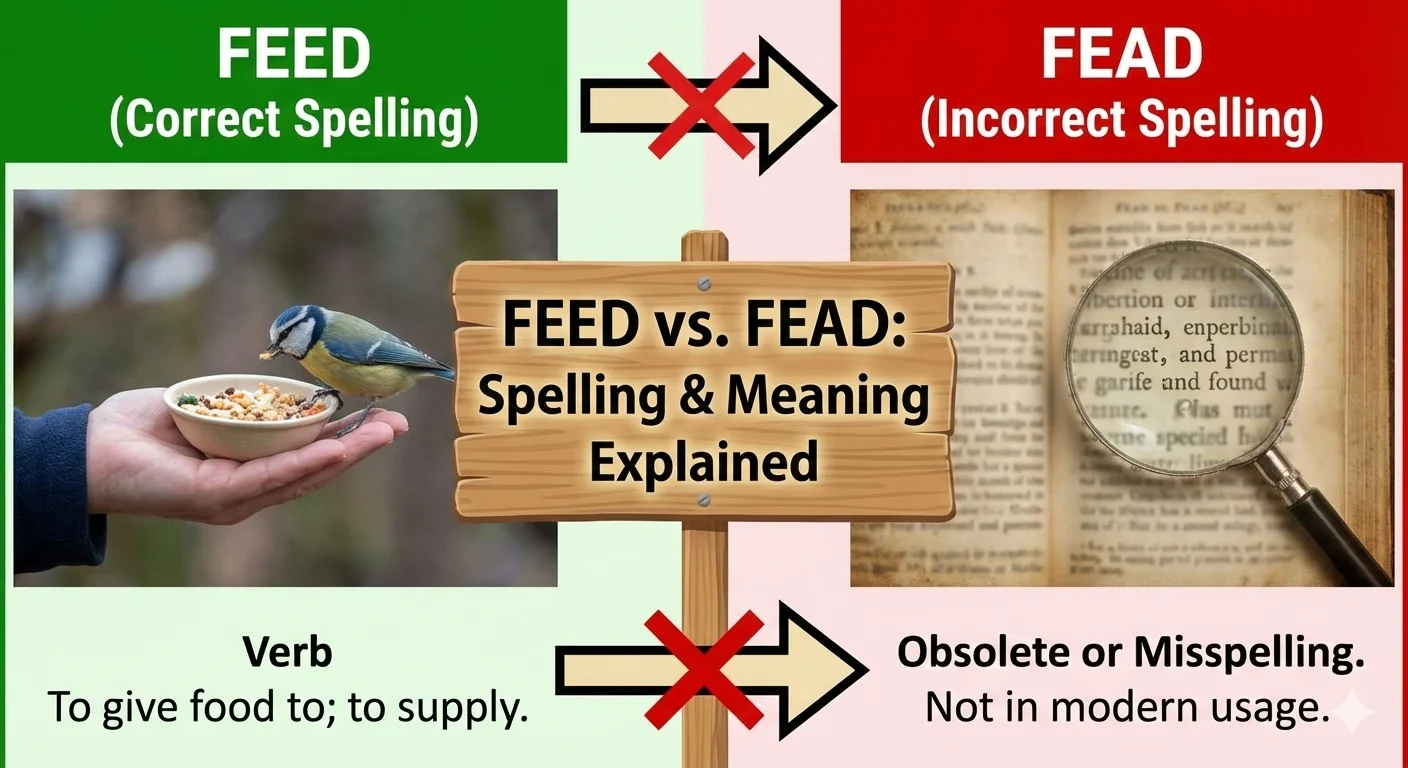
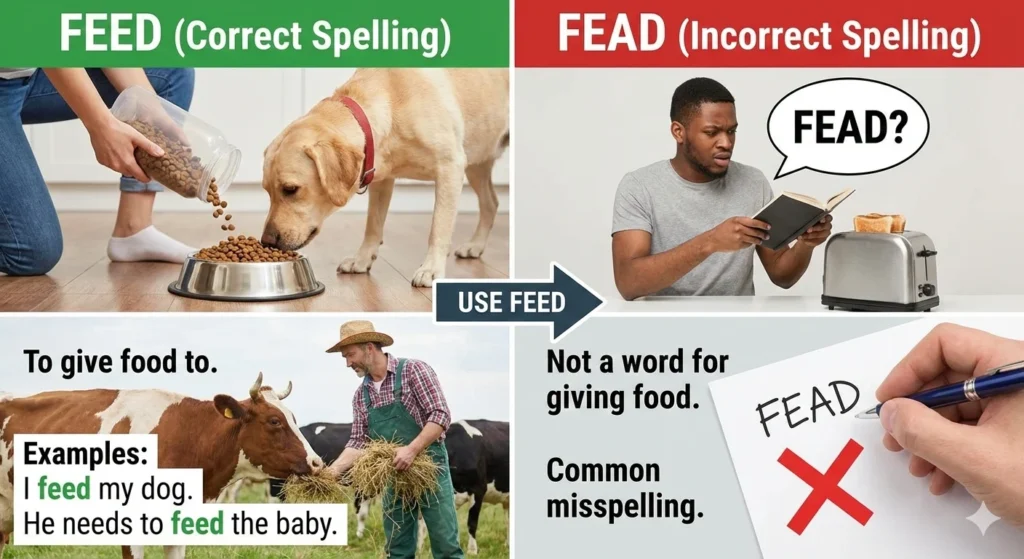
Are you unsure whether to write fead or feed? You’re not alone. The correct spelling is feed, and “fead” is a common mistake. Feed means to give food, supply, or nourish someone or something.
In this guide, you’ll learn the correct usage of feed vs fead, see clear examples, and understand how to avoid this common spelling error. By the end, you’ll confidently write feed in emails, assignments, and daily communication.
Fead or Feed Means
The correct spelling is feed.
- Feed (verb): To give food or nourishment, or supply content online.
- Example: I feed my cat every morning.
- Feed (noun): Food for animals or social media updates.
- Example: The farmer bought chicken feed.
- Fead is incorrect.
Extra examples:
- Feed meaning in social media: Stream of posts on Instagram or Twitter.
- Feed in agriculture: Food given to livestock.
- Past tense of feed: Fed
- Future tense of feed: Will feed
The Origin of Fead or Feed
“Feed” comes from Old English fēdan, meaning to nourish or supply food. Historical manuscripts show variations like fedan, but fead never became standard.
- Past tense: Fed
- Future tense: Will feed
Old English example:
- 13th-century text: “He doth fede the shepe eueri day.”
- Modern: “He feeds the sheep every day.”
Understanding this origin shows why feed is universally correct.
British vs American English Spelling
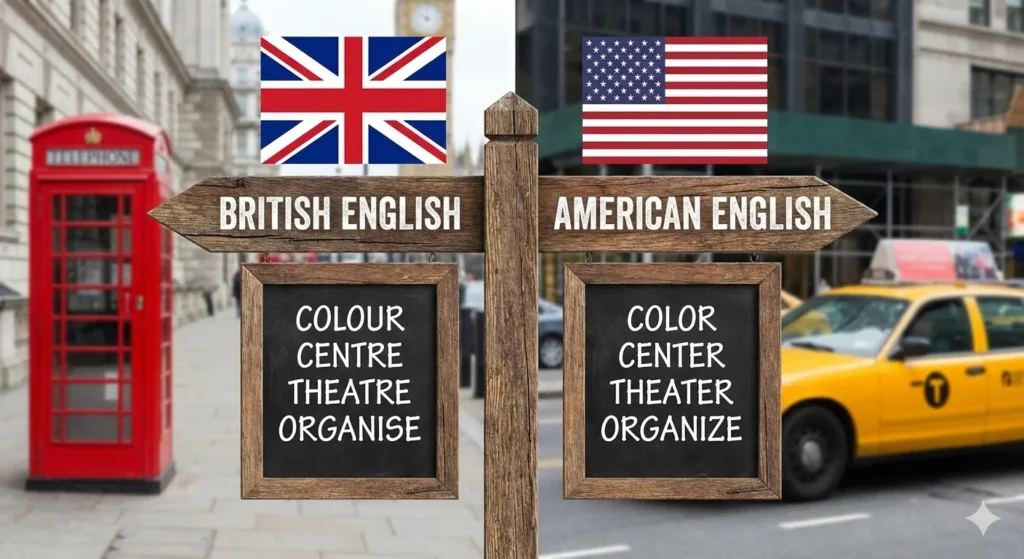
Unlike words like colour/color, feed is spelled the same in both British and American English.
| Form | British English | American English | Notes |
|---|---|---|---|
| Present | feed | feed | Correct ✔ |
| Past | fed | fed | Correct ✔ |
| Future | will feed | will feed | Correct ✔ |
| Incorrect | fead | fead | Avoid ❌ |
Which Spelling Should You Use?
- US audience: Feed ✅
- UK/Commonwealth audience: Feed ✅
- Global writing: Feed ✅
Tip: Always type feed; Google, dictionaries, and grammar guides confirm it. Fead is a typo.
Common Mistakes with Fead or Feed
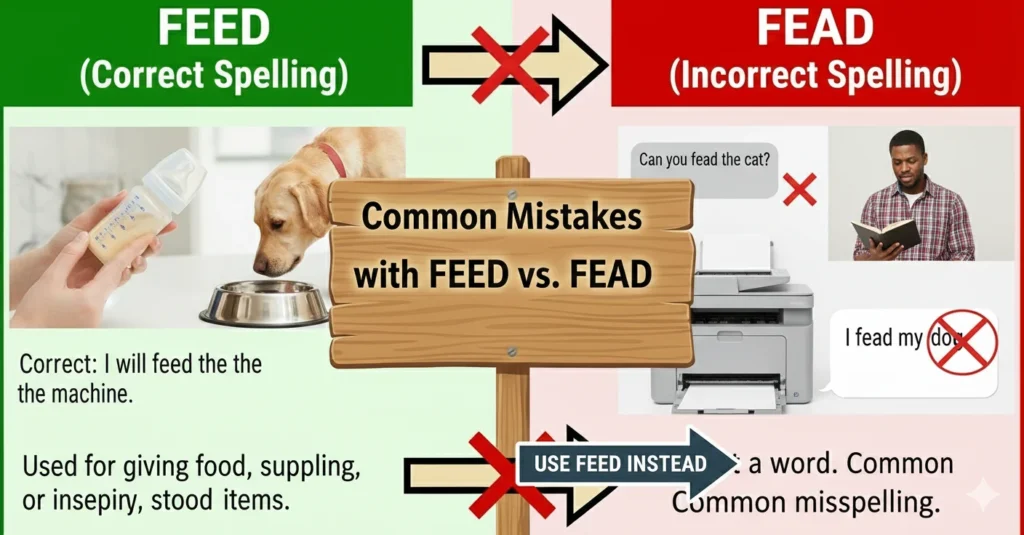
| Mistake | Correct Usage | Notes |
|---|---|---|
| Fead | Feed ❌ | Fead is wrong |
| Feeded | Fed ❌ | Past tense mistake |
| Check my fead | Check my feed ❌ | Social media |
| Feeding future misuse | Will feed ✔ | Correct future tense |
Examples:
- ❌ I fead my dog → ✅ I feed my dog
- ❌ I feeded the chickens → ✅ I fed the chickens
- ❌ Check my fead → ✅ Check my feed on Instagram
What is this feed? – Explained Simply
“What is this feed?” can mean:
- Agriculture: Food supplied to animals.
- “The cow is eating feed.”
- Social Media: Stream of updates/posts.
- “I scrolled through my Instagram feed this morning.”
Tip: Use future tense: I will feed the cattle tomorrow.
Fead or Feed in Everyday Examples
Emails:
- Please feed the team with the latest report by 3 PM.
News:
- Farmers increase chicken feed during winter months.
Social Media:
- Check my feed for the latest travel photos.
Formal Writing:
- The cattle were fed twice daily according to the schedule.
Fead or Feed – Google Trends & Usage Data
Search spikes for feed:
- Agriculture seasons – livestock feed
- Social media trends – Instagram/TikTok feeds
- Grammar queries – ESL learners
| Keyword Variations | Popularity | Notes |
|---|---|---|
| Fead | Very low ❌ | Typo |
| Feed | Very high ✔ | Correct/trending |
| Feed meaning in social media | High ✔ | Strong search intent |
| Fead or feed meaning | Medium ❌ | Users confus |
FAQs
- Difference between feed and fead?
- Feed ✅, fead ❌
- Meaning of feed?
- To provide food, nourishment, or content; noun/verb
- Past tense of feed?
- Fed
- Feed in agriculture?
- Food for farm animals
- Feed in social media?
- Stream of posts
- Future tense?
- Will feed
- Can fead ever be correct?
- No
- Old texts?
- Only rare historical variants
- Feed vs fed vs feeding?
- Present: feed, Past: fed, Future: will feed, Continuous: feeding
Conclusion
The correct spelling is always feed, in social media, agriculture, and professional writing. Avoid fead.
Past tense: fed, future: will feed, noun/verb context: check examples. Following this guide will make your writing professional.

Rhonda Byrne inspires millions through her teachings on The Law of Attraction and the power of positive thought. Her insights on angel numbers reveal how gratitude and mindset align us with divine guidance.