Have you ever searched “fact or cramp” and wondered what it really means? You are not alone. Many people type this phrase when they are confused about muscle pain, health claims, or word meanings. Some want to know What is a cramp? Others are checking if something is a medical fact or just a myth.
This article solves that confusion in a simple way. First, we explain what a cramp is. Then, we clarify how the word fact is different. You will learn causes, treatment, examples, and correct usage. We will also answer common questions like What does cramp feel like?, Does cramp mean lack of salt?, and When to worry about leg cramps?
By the end, you will know the real difference between fact and cramp, how to use them in sentences, and how to stop muscle cramps fast.
Fact or Cramp Means
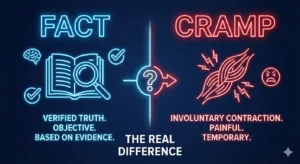
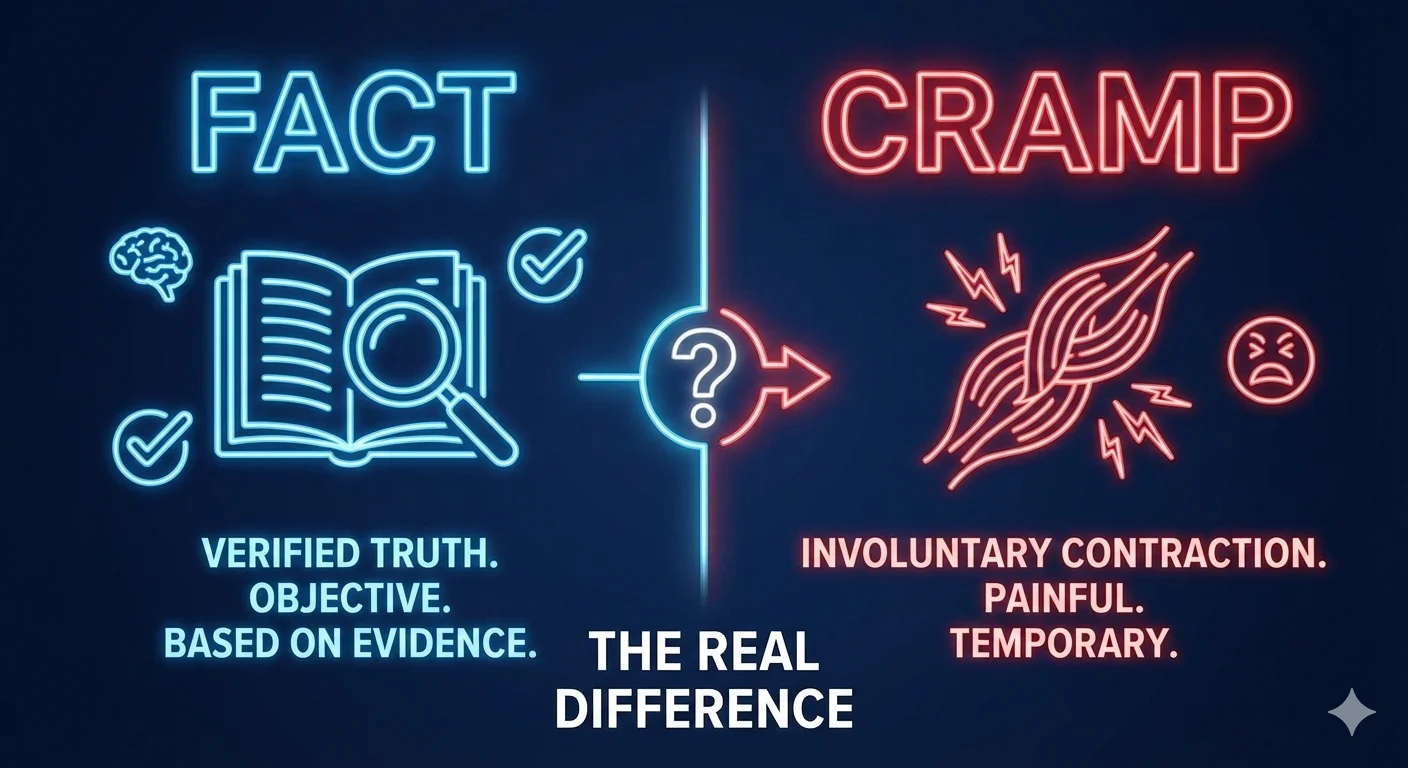
A fact is something true and proven.
A cramp is sudden muscle pain.
They are not spelling variations. They are two different words.
Example:
- It is a fact that water helps prevent cramps.
- I woke up with a painful leg cramp.
If you are asking “What is a cramp?” — it is a sudden tightening of a muscle that causes sharp pain.
If you are asking about truth — you mean fact, not cramp.
The Origin of Fact or Cramp
Fact comes from Latin factum, meaning “something done.” It entered English in the 1500s.
Cramp comes from Old French crampe, meaning “hook” or “claw.” It describes how a muscle feels when it tightens.
There is no spelling difference between British and American English for these words. They have always been separate in meaning.
British English vs American English Spelling
There is no spelling difference between US and UK English for fact and cramp. Both countries use the same form.
| Word | American English | British English | Meaning |
|---|---|---|---|
| Fact | Fact | Fact | Truth or proven information |
| Cramp | Cramp | Cramp | Sudden muscle pain |
Unlike words like color/colour, these words stay the same globally.
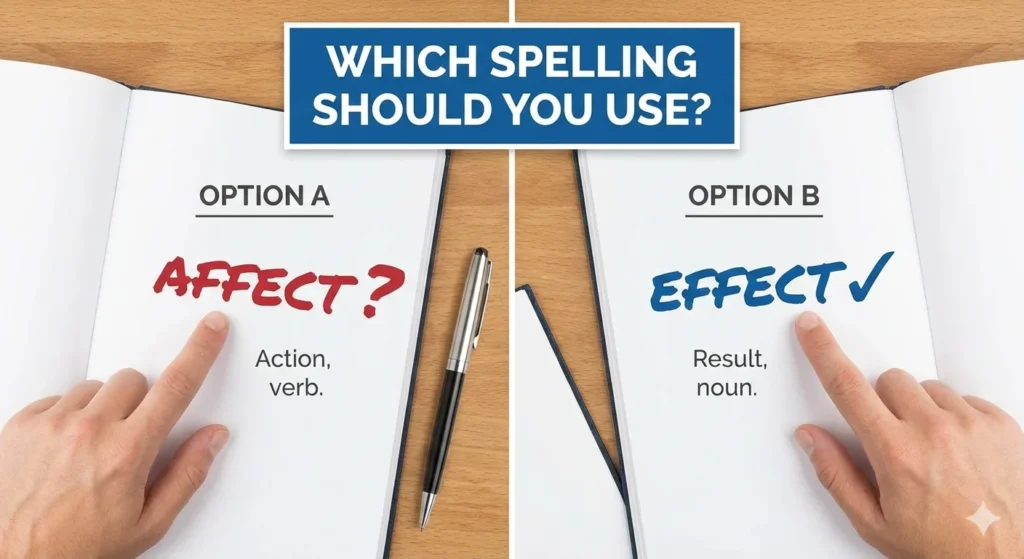
Which Spelling Should You Use?
Use:
- Fact when talking about truth or proven data.
- Cramp when talking about muscle pain.
Audience advice:
- 🇺🇸 US: Use “fact” or “cramp” normally.
- 🇬🇧 UK/Commonwealth: Same spelling.
- 🌍 Global writing: Both words are standard English.
Always check your sentence meaning. That solves 99% of confusion.
Common Mistakes with Fact or Cramp
Here are common errors:
❌ “I have a fact in my leg.”
✔ “I have a cramp in my leg.”
❌ “It’s a cramp that water helps.”
✔ “It’s a fact that water helps.”
Another mistake: thinking cramps only happen due to salt loss.
People ask: Does cramp mean lack of salt?
Not always. Salt loss can be one cause, but it is not the only reason.
Fact or Cramp in Everyday Examples
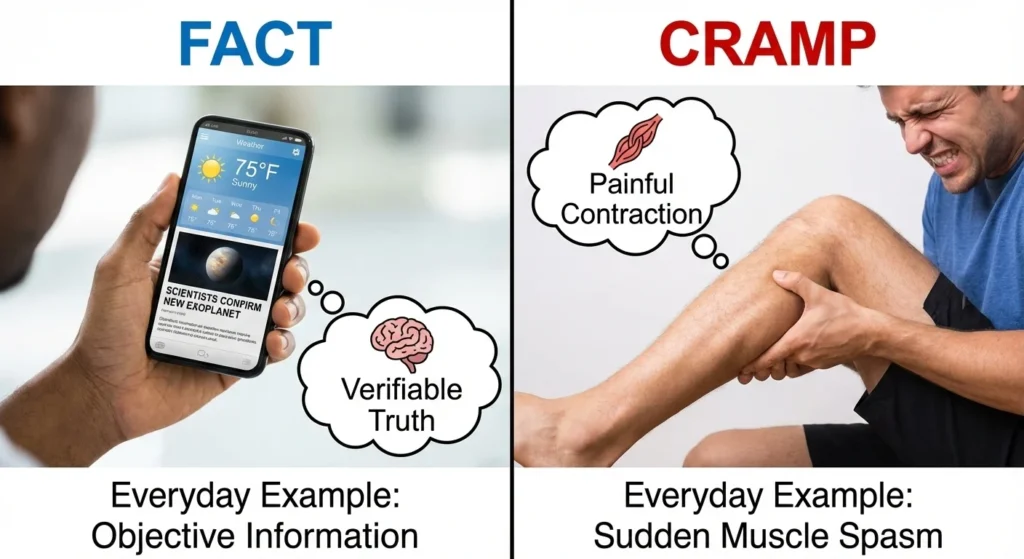
In Emails
- “It is a fact that deadlines matter.”
- “Sorry, I have a muscle cramp and need a break.”
In News
- “Doctors explain why muscle cramps happen.”
- “It is a medical fact that hydration helps.”
On Social Media
- “Fun fact: Bananas help reduce cramps.”
Formal Writing
- “The study confirms the fact.”
- “Muscle cramps treatment includes stretching.”
If you wonder, How do you use cramps in a sentence?
Example: “She had severe cramps after running.”
Understanding Muscle Cramps
What is a cramp?
A cramp is a sudden, painful muscle contraction.
What does cramp feel like?
It feels tight, hard, and sharp. The muscle may look stiff.
What are 5 common causes of muscle cramps?
- Dehydration
- Low potassium
- Low magnesium
- Muscle fatigue
- Poor blood flow
Why do muscle cramps happen?
Muscles lose balance of fluids and minerals. Nerves may overfire.
What causes severe muscle cramps all over the body?
It can be:
- Electrolyte imbalance
- Nerve issues
- Thyroid problems
- Side effects of medicine
See a doctor if cramps are frequent.
How to stop leg cramps immediately
- Stretch the muscle
- Massage gently
- Drink water
- Apply heat
How to stop muscle cramps fast
- Stand and stretch
- Flex the foot upward
- Walk slowly
- Drink fluids
When to worry about leg cramps
See a doctor if:
- Cramps happen daily
- Pain is severe
- Swelling appears
- Weakness continues
This is important for safe muscle cramps treatment.
Fact or Cramp – Google Trends & Usage Data
Search data shows:
- “What is a cramp” is searched worldwide.
- “How to stop leg cramps immediately” is popular in the US, UK, India, and Australia.
- “Muscle cramps treatment” is trending in health searches.
- “Fact” is more common in education and news topics.
Health-related cramp searches are rising due to sports, aging, and lifestyle stress.
Comparison Table – Fact vs Cramp
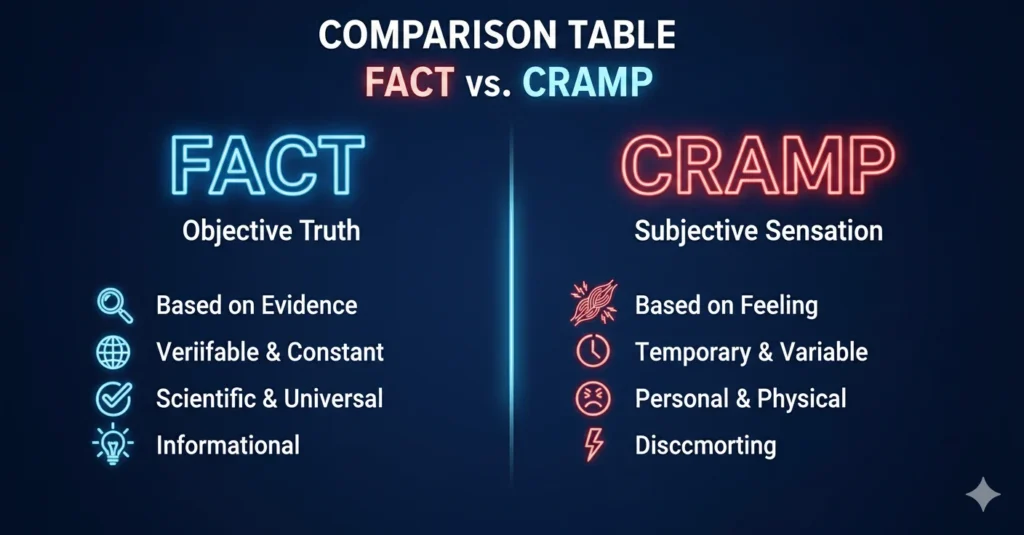
| Feature | Fact | Cramp |
|---|---|---|
| Meaning | Truth | Muscle pain |
| Category | Information | Medical condition |
| Example | It’s a fact. | I got a cramp. |
| Related Keywords | Evidence, truth | Muscle cramps, leg cramps |
| Health Context | Not medical | Yes |
FAQs
1. What is a cramp?
A cramp is sudden muscle tightening that causes pain.
2. What does cramp feel like?
It feels sharp, tight, and stiff.
3. Does cramp mean lack of salt?
Not always. It can also mean dehydration or fatigue.
4. Why do muscle cramps happen?
They happen due to fluid loss, mineral imbalance, or tired muscles.
5. How to stop muscle cramps fast?
Stretch, massage, and drink water.
6. When to worry about leg cramps?
If they are severe, frequent, or linked with swelling.
7. How do you use cramps in a sentence?
“I had cramps after the marathon.”
Conclusion
The difference between fact or cramp is simple but important. A fact is something true and proven. A cramp is sudden muscle pain. They are not spelling variations. They are separate words with separate meanings.
If you searched this keyword, you likely wanted quick clarity. Now you know the difference. You also understand muscle cramps, their causes, and treatment steps. Remember, cramps can happen due to dehydration, low minerals, or fatigue. Simple actions like stretching and hydration help fast.
Always use the right word based on meaning. For health issues, seek medical advice if cramps are severe or frequent. Knowing the difference improves your writing and protects your health.
Clarity is power. Now you know the fact — and how to handle a cramp.

Neville Goddard was a visionary spiritual philosopher whose teachings on imagination and consciousness continue to transform lives. His work reveals how our thoughts create reality and how faith shapes destiny. On this angel number site, Neville’s perspective deepens our understanding of divine numbers — showing how each sequence mirrors our inner beliefs and the creative power of the mind.